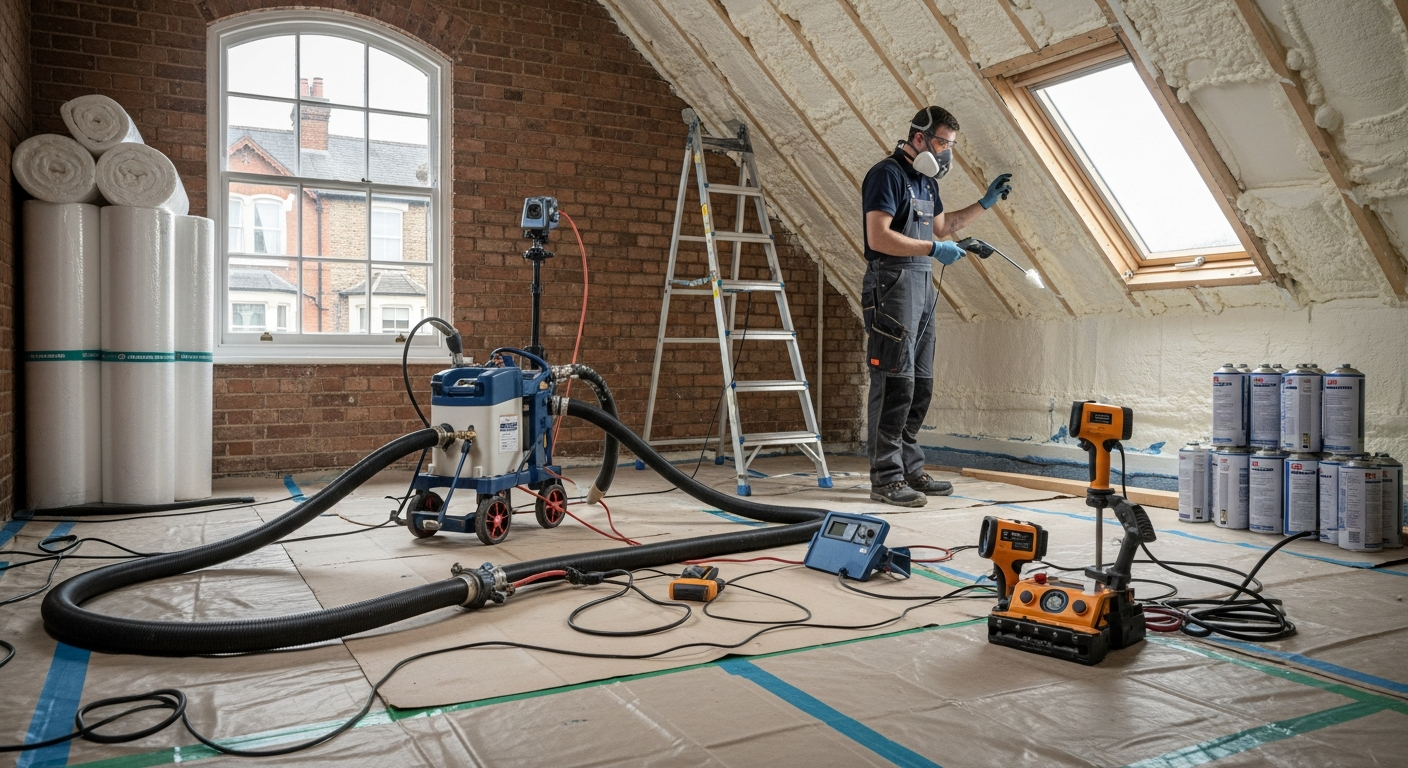
Spray Foam Survey Leeds: What's Actually in Your Loft, and What It Means
Spray Foam Survey and Report in Leeds — identify foam type, check timbers, protect property value and satisfy mortgage requirements. Free survey available.
Spray Foam Survey Leeds: What’s Actually in Your Loft, and What It Means
If a mortgage valuer, RICS surveyor, or estate agent has flagged spray foam insulation in your loft, you need answers before you can move forward with a sale, remortgage, or purchase. A proper spray foam survey Leeds homeowners can rely on tells you what type of foam is up there, what condition the timbers are in underneath it, and what your options actually are. We carry out these surveys across Leeds and West Yorkshire, and we write up a spray foam report that lenders and surveyors can act on. This isn’t guesswork or a sales visit dressed up as an inspection — it’s a proper look at your roof, done by someone who removes and installs foam for a living, so we know what we’re looking at either way.
What Actually Happens During the Inspection
Spray foam insulation causes problems for lenders because it can hide roof timbers from view, trap moisture against the underside of the roof felt, and in some cases has been sprayed directly onto old bitumen felt that was never designed to be sealed in. A mortgage valuer can’t see through it, so many will refuse to lend, or the surveyor will recommend a specialist report before the sale proceeds. That’s where we come in.
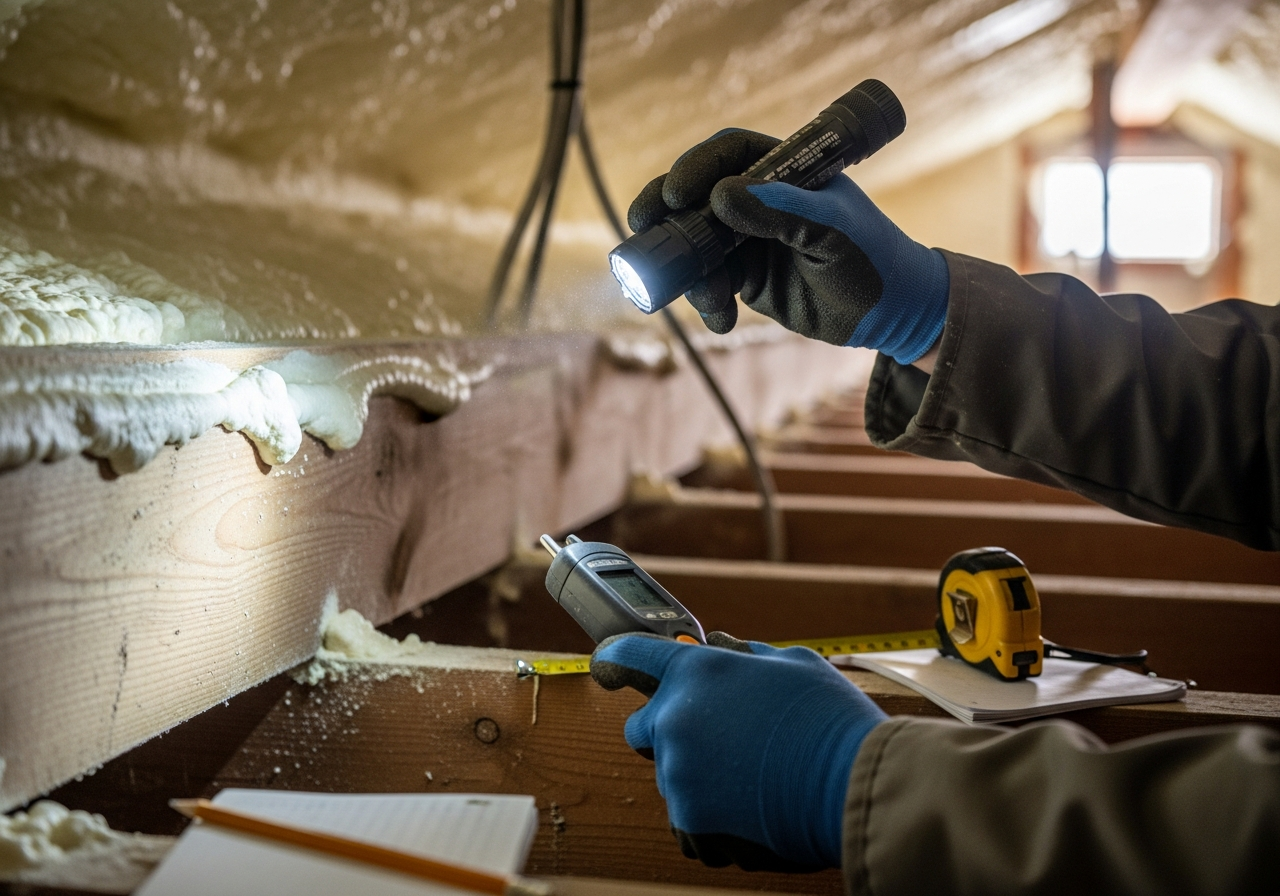
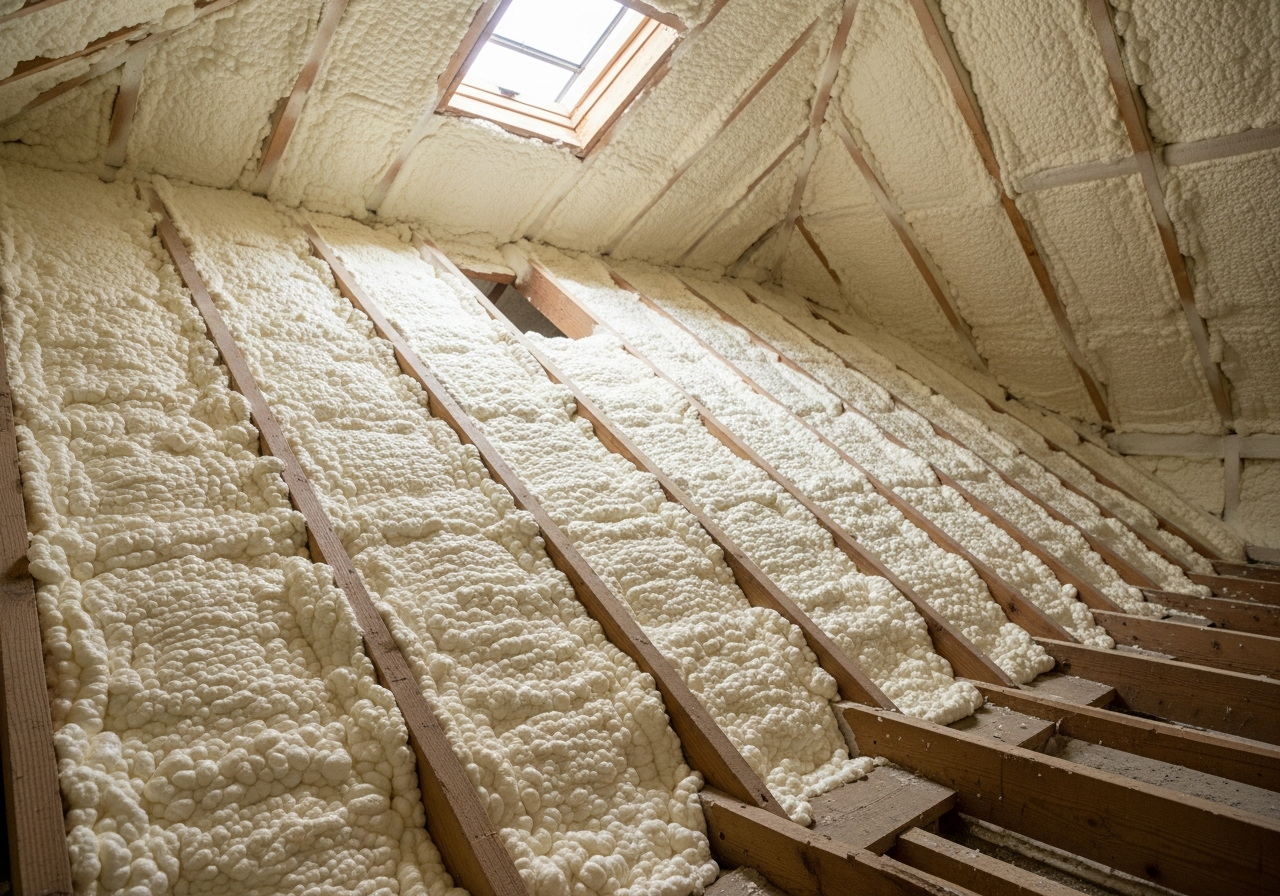
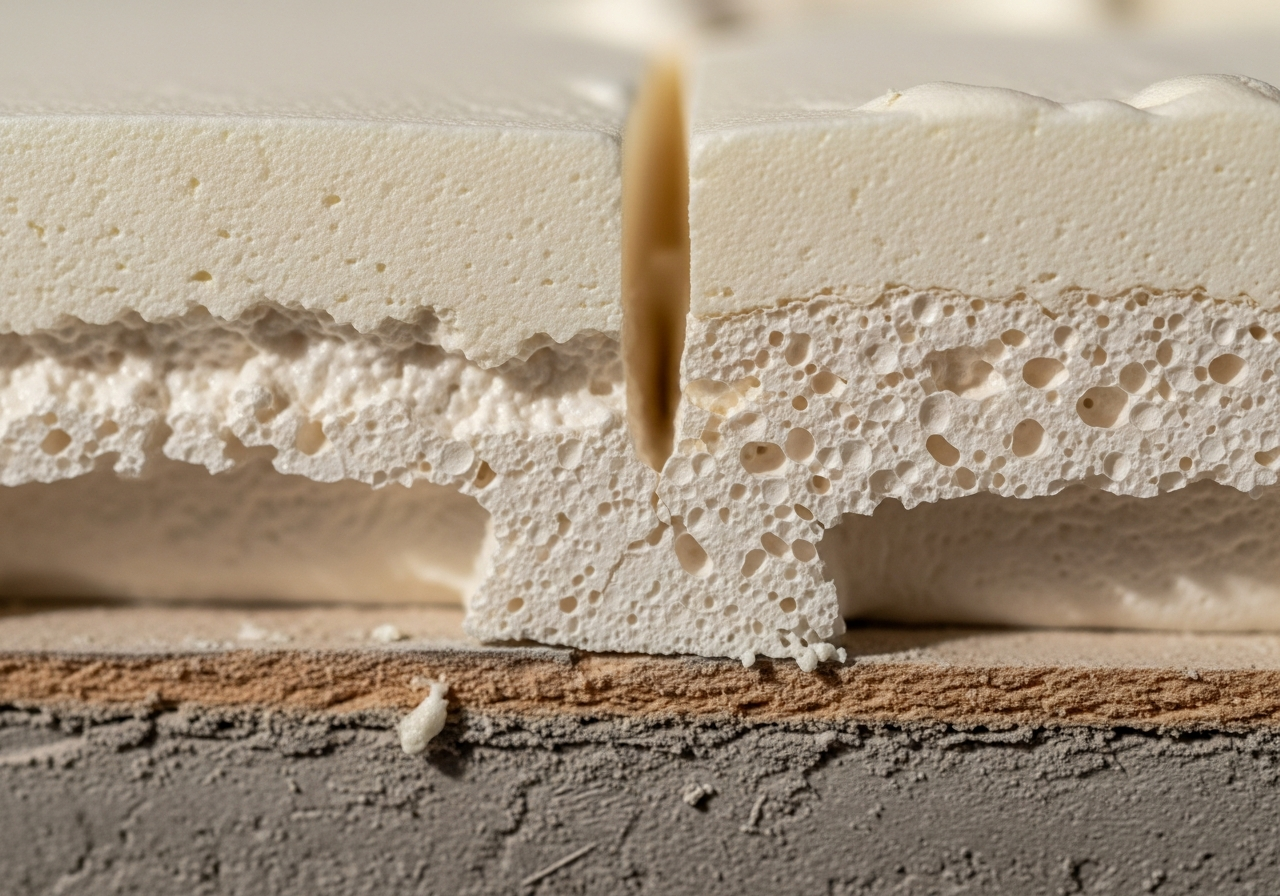
We physically get into the loft space — not just a look through the hatch. We check whether the foam is open-cell (softer, breathable, greyish) or closed-cell (dense, rigid, often white or cream), because the two behave very differently and carry different risks. We look for signs of timber decay, check moisture readings with a meter rather than guessing, and assess whether the roof covering underneath is felt, breathable membrane, or sarking board, since that affects how much of a problem the foam actually is. We photograph everything and note ventilation provision, or the lack of it, because poor ventilation combined with closed-cell foam is usually where the real damage starts.
Who Needs This Survey
This service is for homeowners in the middle of a house sale where the buyer’s mortgage has been declined or delayed because of spray foam found during valuation. It’s also for people buying a property where foam has already been flagged, and they want an independent assessment before they commit. We see a fair number of landlords too, checking rental properties ahead of refinancing, and homeowners who’ve simply had cold feet after reading about foam problems online and want to know where they actually stand. If you’ve already had foam removed by another contractor and need paperwork to satisfy a lender, that’s covered separately below.
Step by Step: From Booking to Report
- You call or book online — we ask a few basic questions about the property, when the foam was installed if known, and what’s prompted the survey.
- Free, no-obligation site visit — one of our surveyors comes out at a time that suits you, seven days a week, 9am to 7pm.
- Full loft inspection — foam type identification, timber probing, moisture readings, ventilation check, and photographic record.
- Roof structure assessment — checking rafters, purlins, and roofing felt condition where the foam allows access.
- Written report produced — typically within 3-5 working days, detailing findings and recommendations in plain language.
- Follow-up conversation — we talk you through what it means, what your removal options are (if any), and rough costs, with no pressure to book further work with us.
What You Gain From Getting This Right
A proper survey and report gives you leverage and clarity. If you’re selling, it gives your buyer’s solicitor and lender something concrete to work with, rather than a vague valuer’s note saying “spray foam present, further investigation recommended.” If you’re buying, it tells you whether you’re looking at a straightforward removal job costing a few thousand pounds, or a more involved repair where timbers need attention too. Either way, you stop guessing and start dealing with facts. For anyone already committed to removal, our report also forms the baseline against which the completion certificate is issued once work is done — proof of what was found, what was removed, and what condition the roof was left in.
Spray Foam Removal Completion Certificate
Once spray foam has been stripped out — by us or, less commonly, another contractor whose work we’re asked to verify — you’ll usually need documented proof for your mortgage lender or buyer’s solicitor. Our completion certificate confirms the foam type removed, the method used, the condition of the timbers once exposed, and any remedial work carried out, such as replacing damaged sarking board or treating minor rot. It’s backed by a 25-year guarantee on any new insulation we install afterwards, and it references the BBA-approved products used where relevant. Lenders generally want to see that the roof structure was inspected once the foam was off, not just that foam was removed — a completion certificate without that timber inspection carries far less weight. This document is what typically unlocks a stalled mortgage application or satisfies a survey condition. We issue it on headed paperwork with photographs from both before and after removal, so there’s a clear paper trail. If another contractor removed your foam and you’re missing this paperwork, we can inspect the loft and issue a verification report, though we’d always rather have done the removal ourselves so we can vouch for the standard of work underneath.
Loft Insulation Survey
Separate from the spray foam question, a loft insulation survey looks at whether your current insulation — foam or otherwise — is doing its job, and to what standard. Current Building Regulations guidance recommends around 270mm of mineral wool equivalent for loft insulation, and a lot of Leeds lofts, particularly in older stock around Chapel Allerton, Headingley, and Horsforth, fall well short of that even before you consider whether foam is causing problems. This survey is for homeowners who aren’t necessarily dealing with a mortgage issue but want to know whether their energy bills are being driven up by inadequate or poorly installed insulation. We measure existing depth and type, check for cold bridging at joist lines, and look at whether insulation has been installed in a way that blocks eaves ventilation — a common fault that causes damp problems long before foam ever comes into it. The benefit is straightforward: you find out whether topping up, replacing, or starting again is the sensible move, with actual figures rather than an assumption based on the house’s age.
Roof Inspection
Where foam has been sprayed directly against the roof timbers and felt, a wider roof inspection often makes sense alongside the loft survey, because the two are connected. We check the roof covering from inside where the foam allows, looking for signs that felt has degraded, torn, or become brittle underneath the foam — a common finding in properties where foam was installed 15-20 years ago onto old-style bituminous felt never designed for that level of sealing. This is for homeowners who’ve noticed damp staining, musty smells in the loft, or slipped tiles externally, as well as anyone whose spray foam survey has already flagged suspect timber. The benefit here is catching a felt or timber problem before it becomes a full re-roof. In some cases what looks like an insulation issue is actually a roofing issue that predates the foam, and the foam has simply been masking it. Knowing which one you’re dealing with changes the whole scope and cost of the work, so we won’t recommend foam removal in isolation if the roof covering itself needs attention first.
What It Costs and How Long It Takes
A standalone spray foam survey and report typically runs free as part of our no-obligation visit when you’re considering removal work with us; where a report is needed purely for a third party (a solicitor or lender, with no removal planned yet), we charge a fixed fee, generally in the £150-£300 range depending on loft size and access. The written report follows within 3-5 working days. If removal and a completion certificate are required afterwards, that’s priced separately based on foam type, loft area, and timber condition, usually discussed once the survey findings are in.
Get a Clear Answer on Your Loft
If a survey or valuation has raised concerns about spray foam in your roof, don’t wait for it to hold up your sale or purchase any longer than it has to. Call us or book online for a free, no-obligation survey — we cover Leeds and the surrounding area seven days a week, 9am to 7pm, and we’ll tell you plainly what we find.
How It Works
From initial survey to completion — here’s what to expect when you work with us.
-
Free Survey
We take a look at your property and tell you exactly what we find — no guesswork.
-
Straight Quote
A clear, itemised quote within 48 hours. No hidden costs, no pressure to decide on the spot.
-
The Work Itself
Our team carries out the job to BBA-approved standards, with minimal disruption to your home.
-
Final Check
We check the finished work with you, tidy up properly, and explain what we did and why.
Frequently Asked Questions
No survey can guarantee a lending decision — that sits with your lender. What we can do is give you an accurate, evidenced report on the foam type and roof condition, which is usually what's needed to move the conversation with your lender or their surveyor forward.
Usually 45 minutes to an hour and a half, depending on loft size, access, and how much of the roof structure is visible around the foam. We'll tell you on the day if we think a longer, more detailed inspection is warranted.
Yes. We regularly inspect and verify work carried out by other contractors, checking timber condition and confirming whether the removal was thorough enough to satisfy a lender or buyer.
In most cases the initial survey is free when it's part of considering removal work. Where a standalone paid report has been produced first, we'll agree how that fits into the overall removal price beforehand.
We'll set it out clearly with photographs and next steps. Some timber issues are minor and easily treated; others need structural attention. Either way, you'll have a specific description of the problem rather than a general warning.
Ready for a Free, No-Obligation Survey?
We'll take a look, tell you exactly what we find, and give you a straight quote — no pressure, no upselling.