Spray Foam Removal Leeds: Getting Your Roof Back to a Mortgageable Condition
Spray Foam Removal in Leeds with full timber checks and completion report for mortgage compliance. Protects property value. Free survey available.
Spray Foam Removal Leeds: Getting Your Roof Back to a Mortgageable Condition
Since 2021, mortgage lenders and RICS surveyors across Leeds and West Yorkshire have taken a much harder line on spray foam insulation found in loft spaces. If you’re trying to sell, remortgage, or you’ve just had a survey come back flagging foam in the roof, you’re not alone — we get calls most weeks from homeowners in exactly this position, from Roundhay to Pudsey to Wetherby.
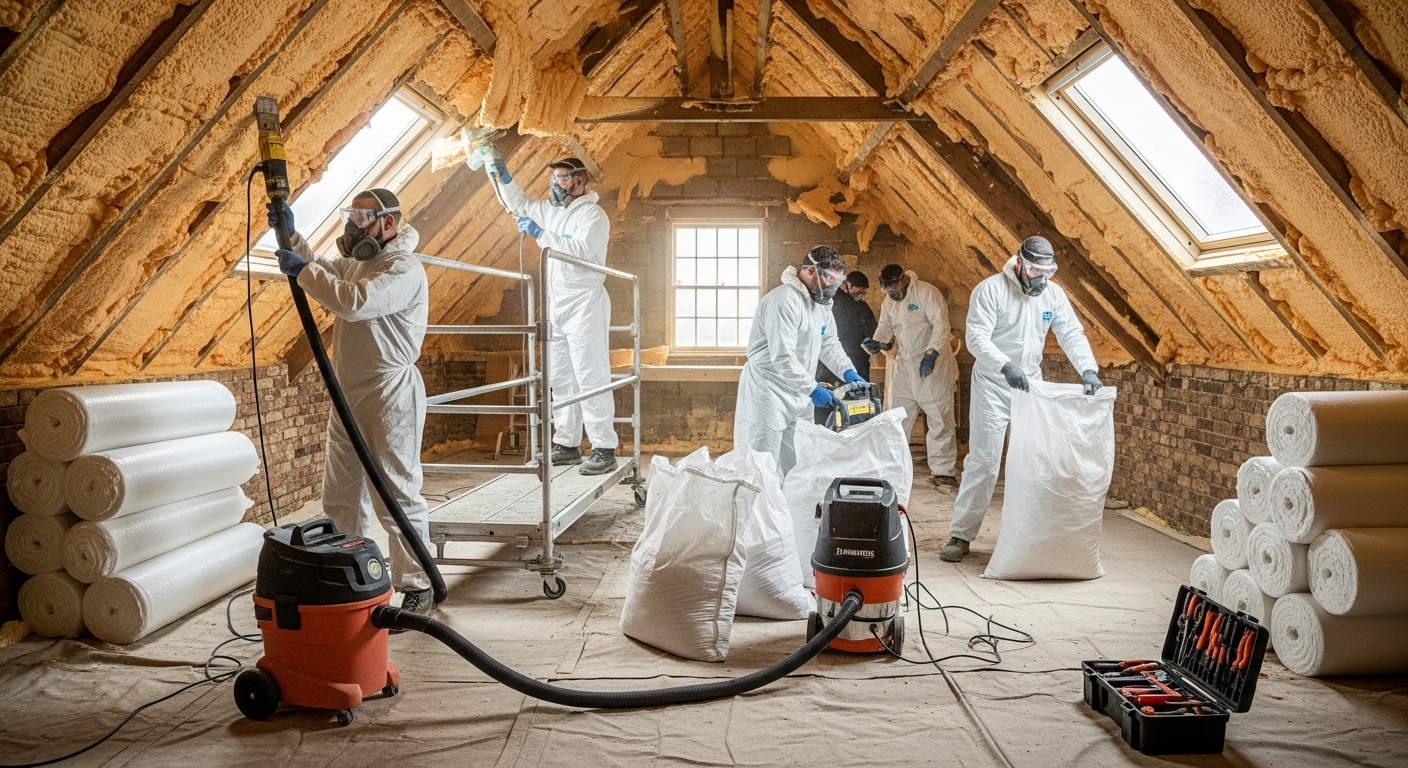
Spray foam removal is the process of stripping that foam back out of the rafters, checking the timber underneath for damage, and putting the roof back into a condition a surveyor can sign off. It’s a job that takes skill and patience — done badly, it can strip felt off with it or leave timber gouged. We do this work across Leeds full-time, alongside installing spray foam for people who want it, so we understand both sides of the job: why it was fitted, why it’s now a problem, and what a clean removal actually looks like.
What Removal Actually Involves
Most of the spray foam we’re asked to remove in Leeds lofts is closed-cell — a rigid, densely packed foam that bonds tightly to the underside of roof timbers and the felt or membrane above them. It was popular through the 2000s and 2010s as a quick way to insulate a loft, often sold as a one-visit fix. The trouble is it bonds so well that it’s now very difficult to inspect the timber or membrane underneath without removing it entirely, which is exactly why lenders won’t touch a property until it’s gone.
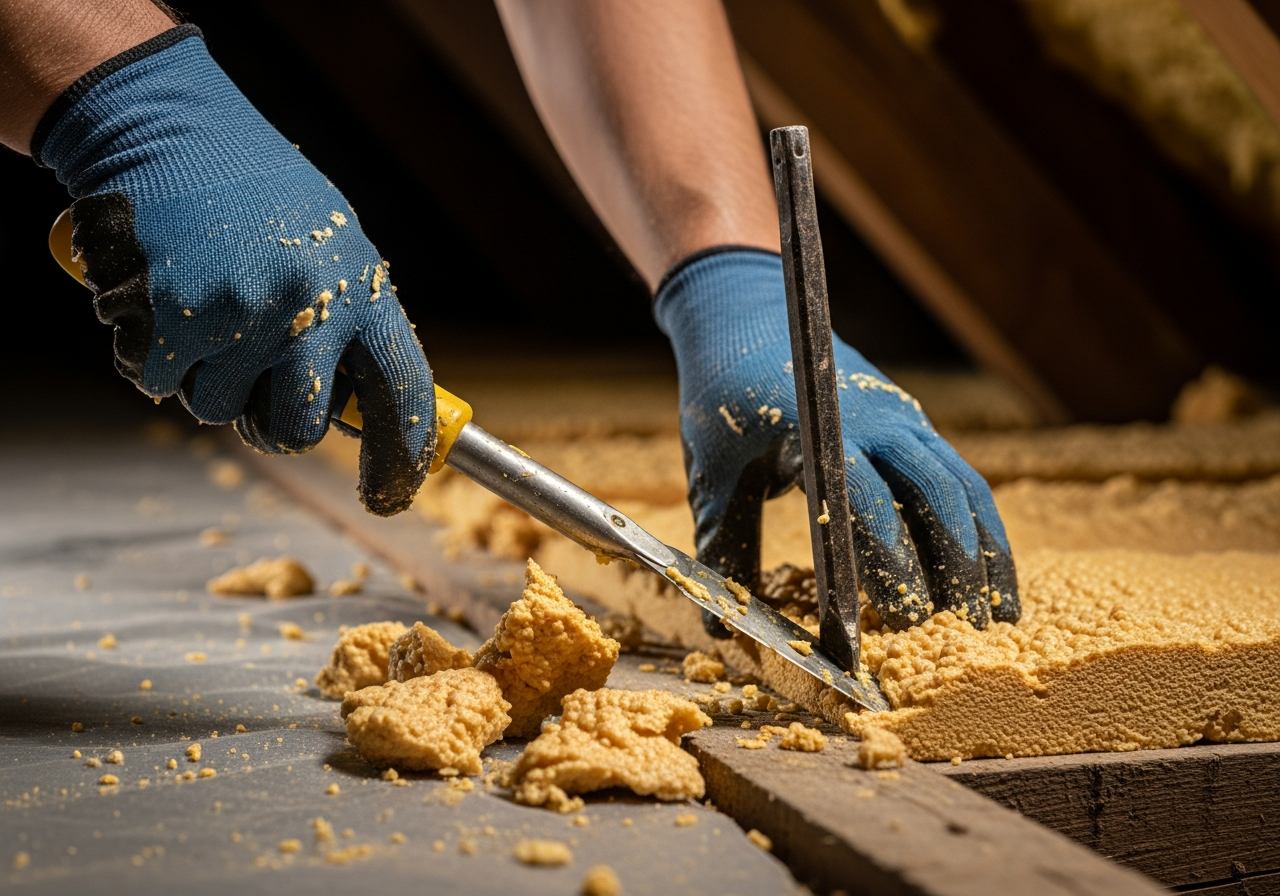
Removal means physically cutting and scraping the foam away from every rafter, truss, and section of felt, working section by section across the whole roof space. It’s slow, dusty work done by hand with specific tools — there’s no shortcut that doesn’t risk damaging the structure. Open-cell foam, which is softer and less adhesive, comes away more easily, but closed-cell can take considerably longer per square metre.
Once the foam is off, the real inspection starts. This is the part that matters most for anyone doing this for a mortgage or sale: we need to see bare timber and bare felt to check for rot, damp staining, or perishing that’s been hidden under the foam for years, sometimes with condensation trapped against the timber the whole time.
Who Needs This Work Doing
The largest group we see are homeowners partway through a house sale, where the buyer’s mortgage valuation or a RICS Level 2 or 3 survey has flagged foam in the loft and made removal, or at least a specialist report, a condition of lending. This affects semis, detached houses, and bungalows equally — age and roof type matter less than whether foam is present at all.
We also get calls from people who aren’t selling but are worried about what the foam might be hiding — often after noticing damp patches on a ceiling, or simply because they bought the house with foam already installed and have never had it checked. And occasionally it’s landlords bringing a property up to standard between tenancies, or homeowners who had foam fitted years ago and have since read about the problems it can cause with ventilation and trapped moisture.
From Survey to Completion: How We Handle the Job
1. Free loft inspection. We come out, get into the loft, and assess the type of foam, how it was applied, and roughly how much timber and felt is affected. No obligation, no charge.
2. Written quote and plan. You get a fixed price based on loft size and foam type, plus a realistic timeframe. We explain what we expect to find, not just what it’ll cost.
3. Foam removal. Our team strips the foam back to bare rafters and felt, working methodically across the whole roof space rather than in patches.
4. Timber and membrane inspection. With everything exposed, we check every rafter and truss for rot, damp damage, or structural weakness, and inspect the felt or membrane for perishing.
5. Repairs where needed. Any damaged timber gets treated or replaced; any failed felt or membrane gets replaced (see below) before the loft is signed off.
6. Completion certificate and report. You get a written report documenting what was found, what was done, and confirmation the roof space has been returned to a standard condition — the document your lender or buyer’s solicitor will want to see.
What You Actually Gain
Beyond the obvious — satisfying a mortgage condition — a proper removal gives you a loft you can trust again. You’ll have documented proof of the timber’s condition, which protects you if questions come up again at a future sale. Ventilation is restored, which matters because trapped moisture behind foam is one of the more common causes of unseen rot. And if repairs are needed, you’re finding out now, at a known cost, rather than after a roof leak years down the line.
Roof Damage Repair
Once the foam is off, timber damage is the single biggest variable in the job — and the reason we won’t quote a fixed removal price without seeing the loft first. Closed-cell foam sprayed directly onto damp or poorly ventilated timber can trap moisture against the wood for years, leading to soft, rotten, or blackened rafters that need cutting out and replacing, or sistering with new timber alongside the original.
This work matters most to anyone selling a property, since a surveyor flagging “possible timber decay” without a clear repair record is often worse for a sale than the foam itself. We treat minor surface staining and dampness with appropriate timber treatment, and replace anything structurally compromised with timber matched to the existing roof — maintaining the roof’s structural integrity rather than just patching around the problem.
The benefit to you is straightforward: a loft that’s genuinely sound, not just one where the foam has been removed and the underlying issue left for someone else to find. Every repair is documented in your completion report, giving your buyer, lender, or surveyor a clear record of what was wrong and what was done to fix it.
Roof Membrane and Felt Replacement
The felt or membrane sitting between your rafters and the tiles is the roof’s main defence against wind-driven rain and condensation, and it’s usually the layer most damaged by having foam bonded directly to it. Older bituminous felt in particular can tear, perish, or crumble when foam is scraped away, even carefully — it was never designed to have anything adhered to its underside.
This section applies to almost every closed-cell foam removal we do, since some degree of membrane disturbance is close to unavoidable. Where the felt is still sound after removal, we leave it in place. Where it’s torn, brittle, or failing, we replace it with a breathable roofing membrane that meets current Building Regulations for roof ventilation — a notable upgrade on the older felt many Leeds roofs still have.
For homeowners, this matters because a roof with damaged, unreplaced felt won’t pass a lender’s requirements even if the foam and timber issues are otherwise resolved. Replacing it properly means your roof is weathertight, correctly ventilated, and compliant — not just foam-free.
What It Costs and How Long It Takes
Pricing depends mainly on loft size, foam type, and how much timber or membrane repair is needed once the foam’s off. As a general guide, straightforward removal from a small to medium semi-detached loft with open-cell foam and minimal timber damage typically runs from £1,500 to £3,000. Larger lofts, closed-cell foam, or jobs needing significant timber and felt replacement can run higher, up to £5,000 or more — we won’t know until we’ve had eyes on it.
Most domestic jobs take one to three days on site, though extensive timber repairs or full membrane replacement can extend that. The free survey itself takes around 30–45 minutes and gives us enough to provide a written, fixed quote — not a rough estimate that changes once we’re up there.
Book Your Free Loft Survey
If a survey or lender has flagged spray foam in your loft, the next step is a free, no-obligation inspection so you know exactly what you’re dealing with — foam type, timber condition, and a fixed price, not a guess. We’re open seven days a week, 9am to 7pm, across Leeds and the surrounding area, and every removal comes with a 25-year guarantee on the work carried out. Get in touch today to arrange your survey.
How It Works
From initial survey to completion — here’s what to expect when you work with us.
-
Free Survey
We take a look at your property and tell you exactly what we find — no guesswork.
-
Straight Quote
A clear, itemised quote within 48 hours. No hidden costs, no pressure to decide on the spot.
-
The Work Itself
Our team carries out the job to BBA-approved standards, with minimal disruption to your home.
-
Final Check
We check the finished work with you, tidy up properly, and explain what we did and why.
Frequently Asked Questions
We can't promise a lending decision, as that sits with your lender and their surveyor. What we can guarantee is a documented, professionally completed removal with a full report on timber and membrane condition — the evidence most lenders want to see before proceeding.
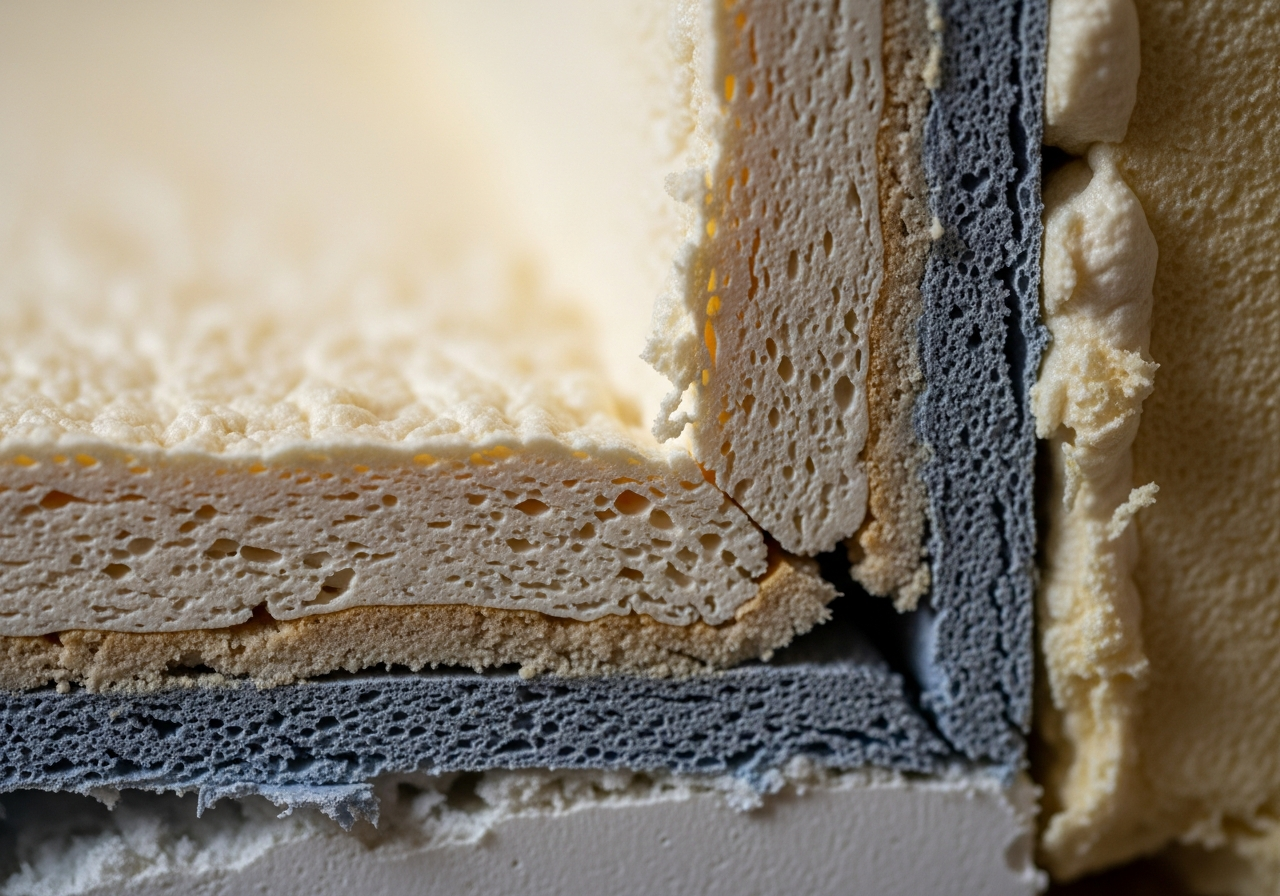
Closed-cell is rigid and hard to the touch, usually dense and difficult to dent. Open-cell is softer, more like a firm sponge. We identify which you have during the free survey — it affects both the removal method and the price.
Some disturbance is common, particularly with closed-cell foam bonded tightly to older bituminous felt. We assess this during removal and replace any membrane that's torn or perishing, so your roof stays weathertight and meets current regulations.
Yes. Every removal job finishes with a written completion report covering what foam was removed, the condition of the timber and membrane found underneath, and any repairs carried out — the document surveyors and lenders typically ask for.
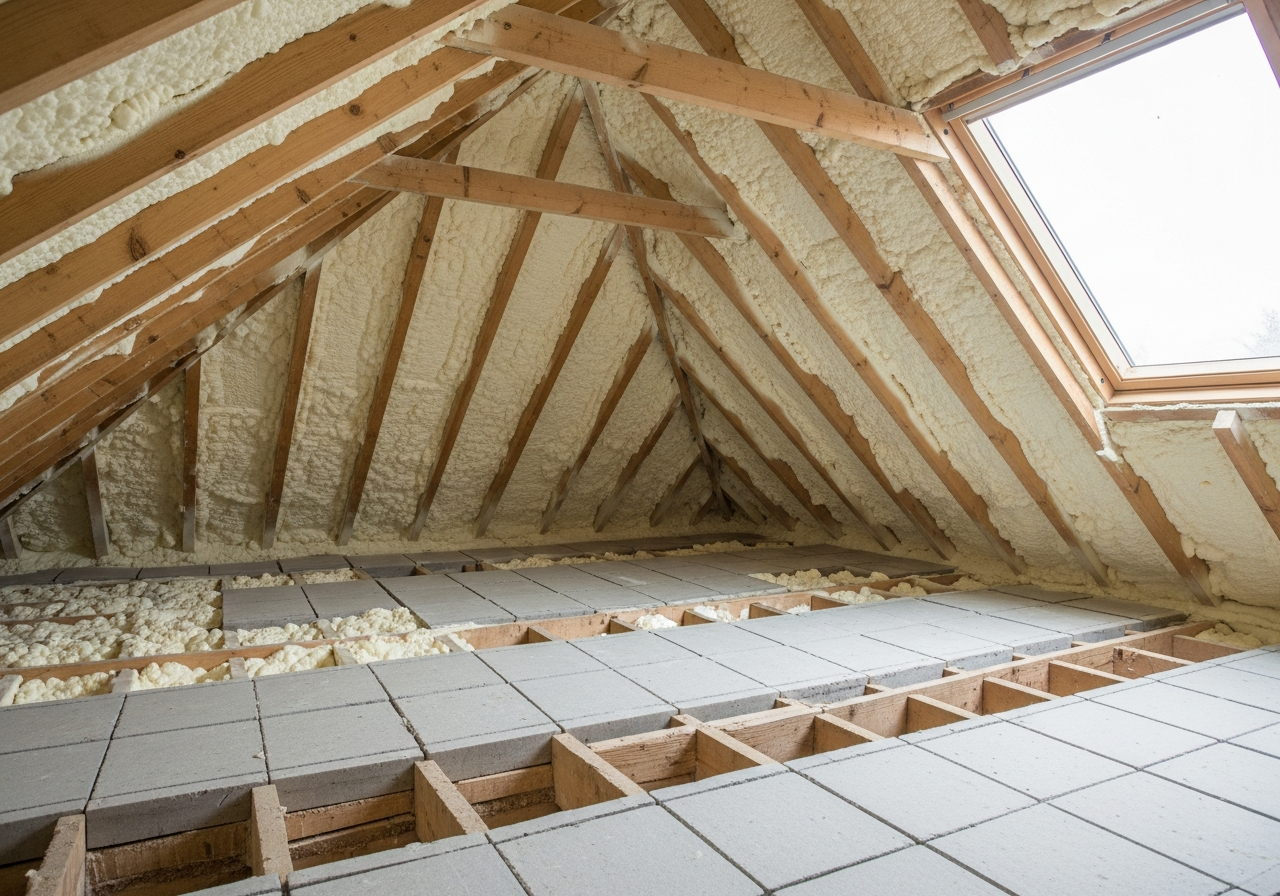
Yes. Since we handle both installation and removal, we can recommend and fit a BBA-approved alternative, such as mineral wool or an approved foam product, once the loft's been inspected and any repairs completed.
Ready for a Free, No-Obligation Survey?
We'll take a look, tell you exactly what we find, and give you a straight quote — no pressure, no upselling.