When Spray Foam Insulation Stops You Getting a Mortgage
Spray Foam Removal for Mortgage Approval in Leeds — resolve RICS survey issues, restore property value and lending compliance. Free survey available.
When Spray Foam Insulation Stops You Getting a Mortgage
Loft insulation shouldn’t hold up a house sale or remortgage — but across Leeds and West Yorkshire, it’s happening on a weekly basis. A surveyor gets into the loft, finds closed cell or open cell spray foam sprayed directly onto the timbers, and flags it as a “material issue” in their report. The lender’s underwriter then asks for further investigation, a removal quote, or a full retrospective survey before they’ll release funds. If you’ve had a mortgage application stall or been refused outright because of foam in the roof, you’re not alone — and it’s usually fixable. This page explains what’s actually involved in spray foam removal for mortgage approval, what a lender or RICS surveyor wants to see, and what it costs to put right.
Why Lenders and Surveyors Object to Spray Foam
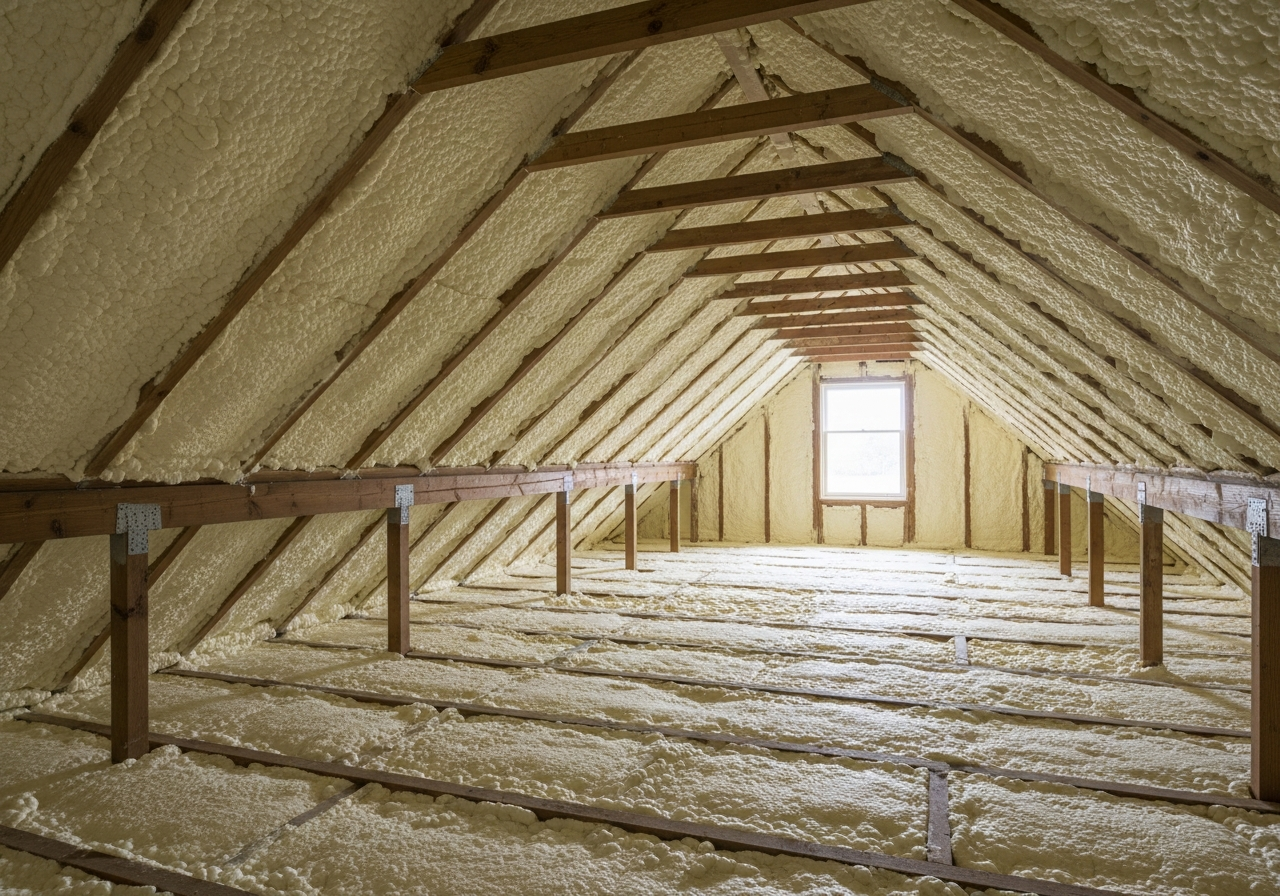
Most residential mortgage valuations in England now follow RICS guidance that treats sprayed polyurethane foam applied directly to roof timbers as a potential problem, not because foam itself is unsafe, but because it makes the roof structure much harder to inspect. Once foam is sprayed onto the underside of the sarking felt or between rafters, a surveyor can no longer see the timber to check for rot, damp staining, or woodworm. Closed cell foam in particular can trap moisture against the timber if the roof has ever had a leak, and that moisture has nowhere to go — which is precisely what worries valuers and insurers.
It’s worth being clear that not every mortgage application with foam present gets refused. Some lenders will proceed with a retrospective U-value calculation or a timber condition report. Others take a harder line and require full removal before they’ll lend. We don’t control which position a given lender takes — but we can give you a property in a condition that satisfies either outcome, with documentation to match.
Who This Service Is For
- Homeowners remortgaging whose lender has flagged foam insulation in the valuation report
- Sellers whose buyer’s mortgage offer is conditional on foam removal or a specialist report
- Buyers who’ve had an offer accepted but the lender won’t release funds until the roof is inspected properly
- Landlords refinancing buy-to-let properties where foam was installed by a previous owner
- Anyone who’s received a RICS Home Survey Level 2 or 3 report naming spray foam as a defect
If any of these sound familiar, the practical next step is usually a proper loft inspection rather than guessing at what a lender will accept.
Step by Step: From Survey to Completion Certificate
1. Free loft inspection. We get into the loft, photograph the extent and type of foam, check accessible timber for visible damage, and note the roof construction (cold roof or warm roof, felt or breathable membrane).
2. Written report and quote. You get a plain-English report describing what we found, whether it’s open cell or closed cell foam, our recommendation, and a fixed price for removal.
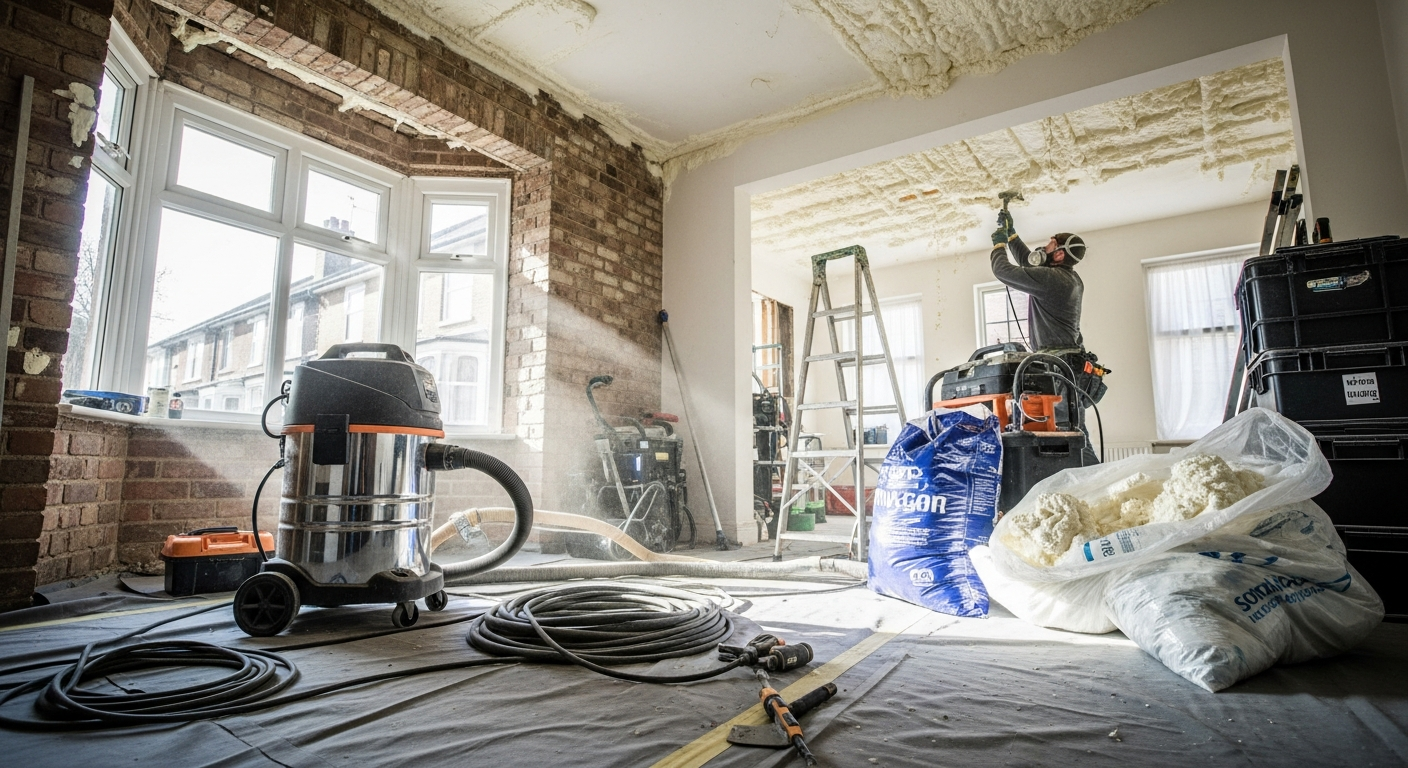
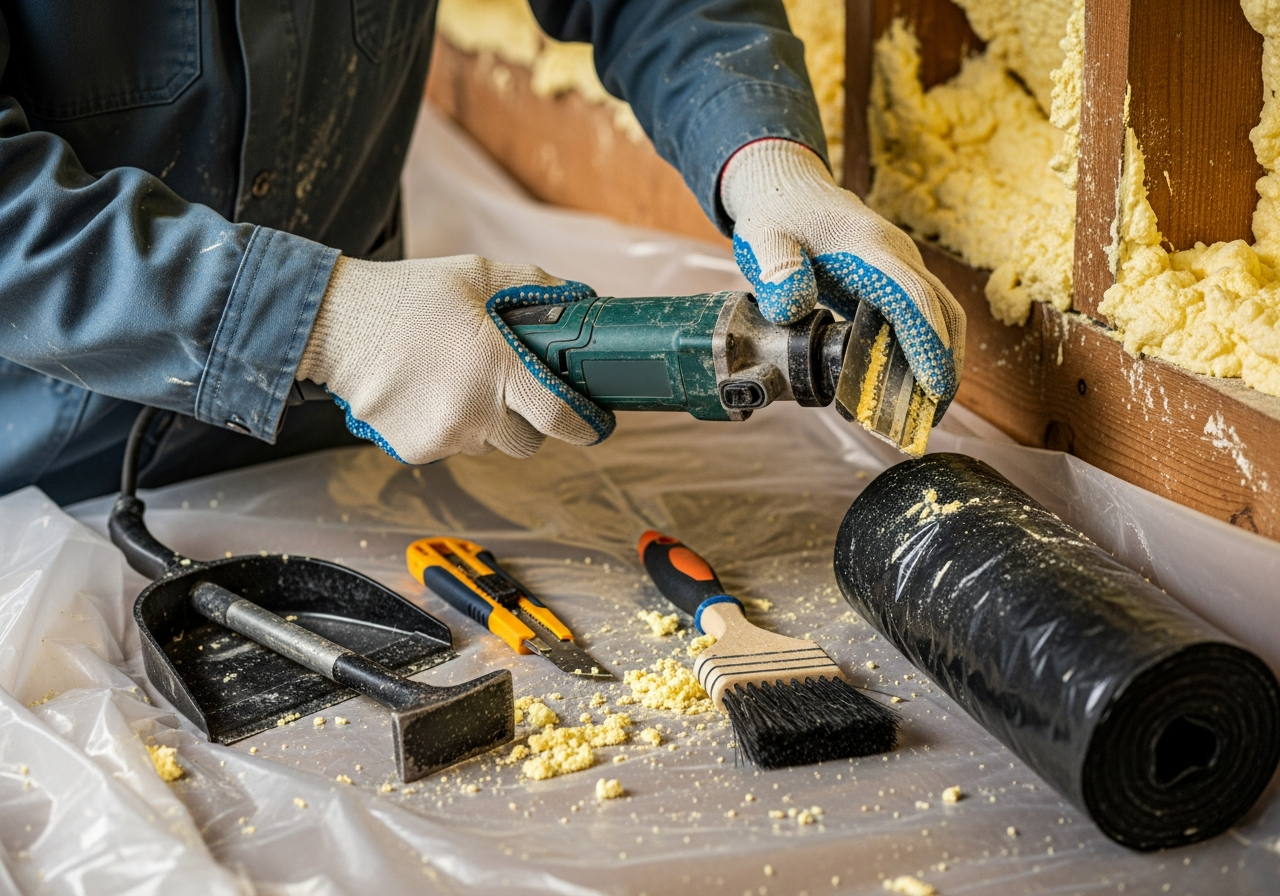
3. Foam removal. We strip the foam back mechanically, timber by timber, rather than chemically dissolving it — this avoids damaging the felt or sarking boards underneath.
4. Timber inspection and treatment. Once the rafters are exposed, we check every length for rot, damp staining, and insect damage. Anything affected gets flagged and, where needed, treated or replaced.
5. Re-insulation (if required). Many homeowners choose to re-insulate using mineral wool or a BBA-approved foam product installed to current Building Regulations standards — this keeps the loft mortgageable going forward.
6. Completion certificate. You receive a written completion certificate confirming what was removed, what condition the timber was found in, and what (if anything) was reinstalled. This is the document your broker or solicitor sends to the lender.
RICS Survey Spray Foam Remediation
If your RICS Home Survey (Level 2 or Level 3) has come back naming spray foam as a “Condition Rating 3” defect — meaning it needs urgent attention — remediation means putting the roof back into a condition a surveyor can properly assess. This isn’t about arguing with the report; it’s about addressing what it found.
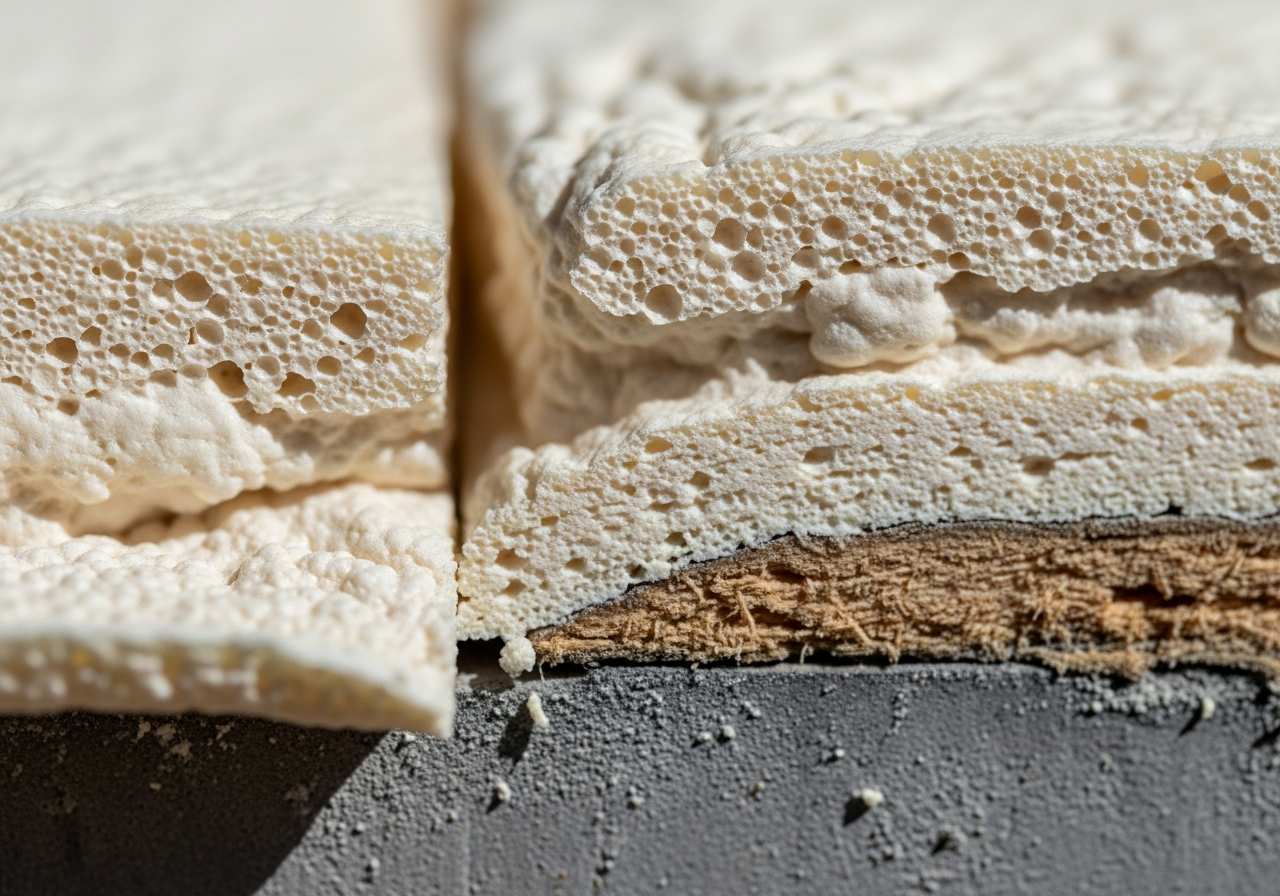
We start by getting a copy of the actual survey wording, since surveyors vary in how much detail they give about the foam type and location. From there we inspect the loft ourselves, confirm whether the foam is closed cell (harder to remove, more likely to have caused hidden timber problems) or open cell, and check whether there’s any evidence of past water ingress. Removal follows the same mechanical process regardless of type, but closed cell jobs typically take longer because the foam bonds more aggressively to timber.
This service suits homeowners partway through a purchase or remortgage where the survey has already happened and time matters — we prioritise these enquiries because a delayed completion certificate can hold up an entire chain. The benefit is straightforward: a re-inspectable roof, a written report a broker can forward to underwriters, and — in most cases — one less obstacle between you and mortgage offer.
Home Seller Spray Foam Reports
If you’re marketing a house that has spray foam in the loft, it’s worth getting ahead of the problem rather than waiting for a buyer’s survey to raise it. A home seller spray foam report is a pre-emptive inspection we carry out before the property goes on the market, or as soon as a buyer’s mortgage broker asks about it.
We inspect the loft, identify the foam type and coverage, check what we can see of the timber without removing anything, and produce a written report you can share with estate agents and prospective buyers upfront. In some cases this is enough to reassure a lender without any removal work at all, particularly where the foam is a small area applied years ago with no sign of timber problems. In other cases, it makes clear that removal will be needed before completion, which lets you negotiate that into the price or get it done before the buyer’s survey rather than after.
This suits sellers who’ve had a previous sale fall through because of foam, or who know from the EPC or old paperwork that spray foam was installed and want to avoid a nasty surprise mid-chain. It saves time, keeps buyers informed, and avoids a valuation being pulled at the last minute.
What You Stand to Gain
Beyond satisfying a lender, removing problem spray foam properly gives you a roof that can be inspected again in future — by any surveyor, for any purpose, without the same objection resurfacing. You also get certainty about the actual condition of your timbers, which foam often conceals for years. Homeowners are frequently surprised to find minor rot or historic damp staining once the foam comes off; better to know now, with the roof open, than after a buyer’s survey flags it a second time. If you re-insulate afterwards with a BBA-approved product installed to current Building Regulations, you keep the thermal performance without the inspection problem, and the work carries a 25-year guarantee.
Cost, Timeline and What a Survey Involves
The free, no-obligation survey takes 30–45 minutes and involves us getting into the loft with a torch and camera — no ceiling removal, no mess. You’ll get a written quote within 24 hours.
Removal costs vary mainly by foam type and roof size:
- Open cell foam removal: roughly £45–£65 per square metre
- Closed cell foam removal: roughly £65–£95 per square metre, reflecting the extra labour to strip it back cleanly
- Timber repair or replacement: priced separately once damage is confirmed, typically £150–£400 per section
- Re-insulation with mineral wool or BBA-approved foam: from £25 per square metre
A typical semi-detached loft (40–60m²) removal runs from £1,800–£4,500 depending on foam type and access. Most jobs are completed in one to three days. We work seven days a week, 9am to 7pm, which helps when a mortgage deadline or completion date is looming.
Get a Free Loft Survey Before Your Mortgage Deadline Passes
If a valuation, survey, or lender has flagged spray foam in your loft, the sooner we inspect it, the sooner your broker has something concrete to work with. We cover Leeds and the surrounding areas, install and remove spray foam under BBA-approved standards, and back completed work with a 25-year guarantee. Call us or book a free, no-obligation survey — we’re open seven days a week, 9am to 7pm.
How It Works
From initial survey to completion — here’s what to expect when you work with us.
-
Free Survey
We take a look at your property and tell you exactly what we find — no guesswork.
-
Straight Quote
A clear, itemised quote within 48 hours. No hidden costs, no pressure to decide on the spot.
-
The Work Itself
Our team carries out the job to BBA-approved standards, with minimal disruption to your home.
-
Final Check
We check the finished work with you, tidy up properly, and explain what we did and why.
Frequently Asked Questions
No contractor can guarantee a lending decision — that sits with the lender's underwriter. What we can do is remove the foam properly, inspect and document the timber, and provide a completion certificate that gives your broker the strongest possible paperwork to submit.
For a straightforward semi-detached loft, allow one to three days for the removal itself, plus the initial survey and report. If timber repairs are needed, add a few days. We can often prioritise urgent chain-related jobs.
Yes. The work is confined to the loft space and doesn't affect living areas below. There's some noise during the mechanical removal stage, but no need to vacate the property.
No, it's optional. Some homeowners leave the loft bare and insulate at ceiling level instead. Most choose to re-insulate with mineral wool or a BBA-approved foam so the loft keeps its thermal performance and remains mortgageable long-term.
It's not unusual — foam can hide damp staining that's built up over years. We flag any affected timber, quote for repair or replacement separately, and won't proceed with re-insulation until it's dealt with, since covering rot back over would just recreate the same problem.
Ready for a Free, No-Obligation Survey?
We'll take a look, tell you exactly what we find, and give you a straight quote — no pressure, no upselling.