Spray Foam Insulation Leeds: A Straight-Talking Guide for Homeowners
Spray foam insulation in Leeds with BBA-approved products, 25-year guarantee and full Building Regs compliance. Cut energy bills. Free survey available.
Spray Foam Insulation Leeds: A Straight-Talking Guide for Homeowners
Spray foam insulation has been fitted in tens of thousands of Leeds lofts and roof spaces over the past two decades, and when it’s specified correctly and installed to BBA-approved standards, it does exactly what it’s supposed to: cuts heat loss, stops draughts, and keeps energy bills down. The problem is that a lot of it wasn’t specified correctly, which is why the material has a mixed reputation with mortgage lenders and surveyors.
We install spray foam insulation across Leeds and the surrounding West Yorkshire area, and we’re also one of the few local contractors who removes it when it’s failed or been fitted wrongly. That two-sided experience matters — we know what a roof timber looks like five years after a botched application, so we only fit what we’d be happy to find in someone else’s loft. Every job comes with a free, no-obligation survey and a 25-year guarantee.
How Spray Foam Insulation Actually Works
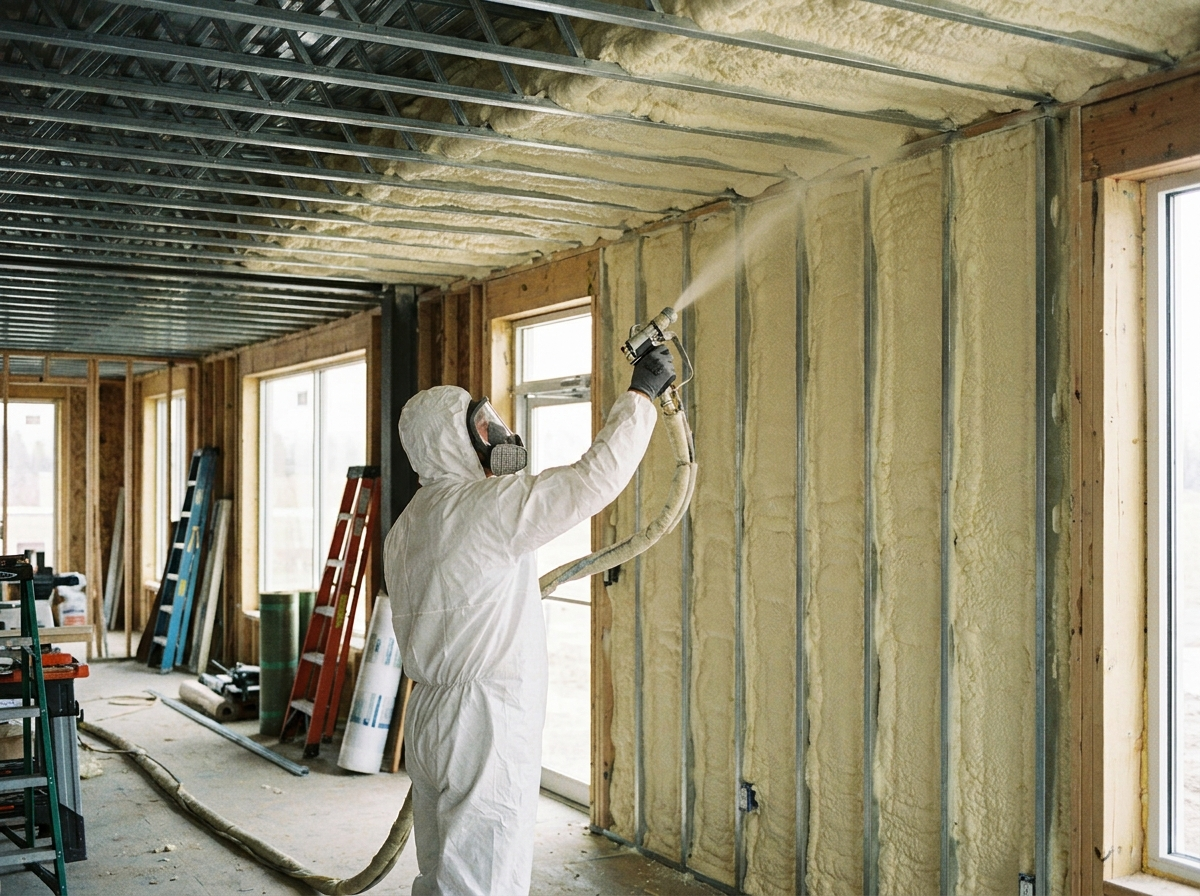
Spray foam is a two-component liquid that’s mixed and sprayed on site, where it expands and cures into a solid layer within seconds. It’s applied directly to the underside of your roof (rafters, purlins, and roofing felt or membrane) or to loft floor joists, depending on whether you’re insulating a warm roof or a cold roof.
Unlike loose-fill mineral wool or fibreglass rolls, foam bonds to the timber and roofing felt as it expands, filling gaps and cavities that traditional insulation can’t reach. That’s part of its appeal — and part of the problem when it’s used wrongly. Foam sprayed directly onto the underside of roofing felt without ventilation can trap moisture against the timber, leading to condensation and rot that isn’t visible until years later. This is the single biggest reason spray foam gets flagged on RICS surveys and mortgage valuations.
Done properly, with the right product for the right roof type and adequate ventilation designed in, spray foam is a legitimate, Building Regulations-compliant insulation method. The key is matching the product — open cell or closed cell — to the property, not applying a one-size-fits-all approach.
Who This Is For
Homeowners insulating an older Leeds terrace or stone-built property with a cold, draughty loft are typical candidates, as are self-builders and extension projects wanting a warm roof specification from the outset. It also suits homeowners converting a loft into habitable space, where insulating at rafter level rather than joist level is often the only practical option. Landlords bringing rental properties up to current EPC requirements frequently ask about spray foam as an alternative to bulkier traditional insulation, particularly where loft space is tight. We’d also point out who it’s not automatically right for: listed buildings or period properties with breathable roofing felt, where closed cell foam can trap moisture in ways that cause long-term timber damage. A proper survey should identify this before any foam goes near your roof.
Step by Step: From Survey to Sign-Off
- Free survey — we inspect your loft or roof space, check timber condition, existing ventilation, and roofing felt type, and confirm whether foam is actually appropriate for your property.
- Specification — we recommend open cell, closed cell, or a combination, based on what we find, and give you a written quote with no obligation.
- Preparation — loft boarding, pipework, and electrics are protected; ventilation provisions are confirmed or added where needed.
- Application — the foam is sprayed in controlled layers to the specified thickness, using BBA-approved products.
- Inspection and certification — we check coverage, thickness, and ventilation, then issue paperwork confirming the installation meets Building Regulations.
- Aftercare — you receive your 25-year guarantee documentation and our contact details for any questions down the line.
Open Cell Spray Foam Insulation
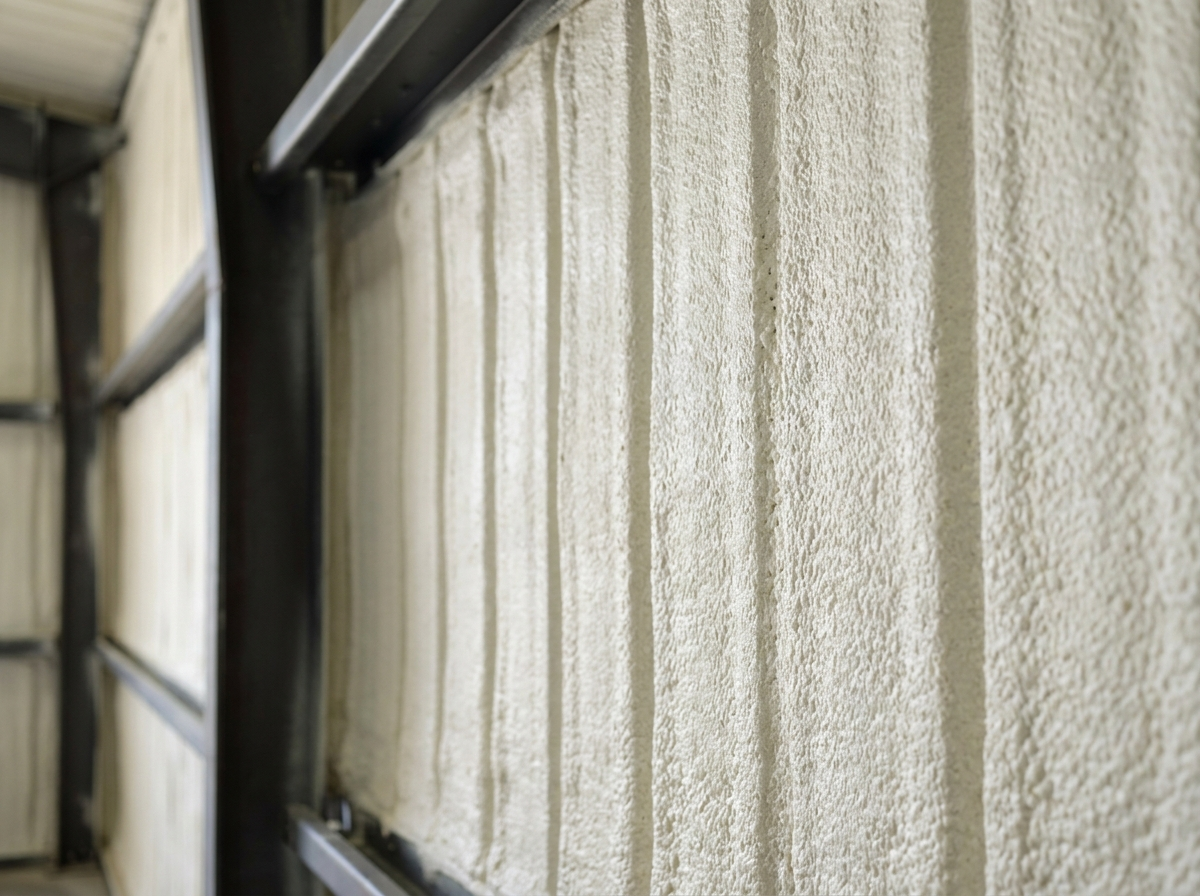
Open cell foam is the softer, more flexible of the two types, with a sponge-like structure that allows a small amount of moisture vapour to pass through it. It’s typically used at rafter level in warm roof conversions and loft rooms, where breathability matters and you want the roof timbers to dry out naturally if any moisture does get in. It expands significantly during application, which makes it good at filling irregular gaps around older, less uniform timberwork — common in Leeds’s stock of Victorian and Edwardian roofs.
Homeowners converting a loft into a bedroom or office typically benefit most, since open cell foam also has useful sound-deadening properties, cutting down noise from rain and wind. It’s less dense than closed cell, so it doesn’t add structural rigidity to a roof, but it’s usually the more affordable option per square metre.
The main thing to get right is ventilation. Open cell foam still needs a compliant airflow path, whether that’s a ventilated membrane behind the foam or eaves ventilation designed in alongside it. We won’t apply open cell foam without confirming this first — it’s the detail most commonly missed by installers who cut corners.
Closed Cell Spray Foam Insulation
Closed cell foam is denser, more rigid, and effectively waterproof once cured, which makes it a different proposition altogether. It has a higher R-value per inch than open cell, meaning you get more thermal performance from a thinner layer — useful where loft height or rafter depth is limited.
Because it’s rigid and adds structural strength, closed cell foam is sometimes specified on flat roofs or areas needing extra reinforcement, as well as in situations with a genuine damp or water ingress risk, such as garages or outbuildings. Its density means it doesn’t allow moisture vapour to pass through it at all, so it must only be used where the roof construction and ventilation strategy account for that — otherwise, moisture gets trapped on the timber side of the foam, which is exactly the scenario that causes rot and RICS flags years later.
We use closed cell foam selectively, and only after confirming the roof build-up can accommodate it safely. It’s not automatically “better” than open cell — it’s a different tool for a different job, and the survey is where that decision gets made properly.
Warm Roof Insulation
A warm roof means insulating at rafter level, so the loft space itself becomes part of the heated envelope of the house, rather than insulating at joist level and leaving the loft cold. This is the standard approach for loft conversions, room-in-roof designs, and any project where the loft is being used as living space rather than storage.
Spray foam suits warm roof specifications well because it can be applied directly to the underside of the roof deck, filling the full rafter depth without the gaps that rigid insulation boards can leave around irregular timber. For Leeds homeowners planning a loft conversion, getting the warm roof detail right at the outset avoids cold bridging, condensation on the underside of the roof, and the kind of localised damp patches that show up on ceilings months after the work’s finished. It also means the loft floor doesn’t need bulky insulation, freeing up headroom that matters in a converted space.
Warm roof foam installations need careful attention to ventilation gaps, breather membranes, and thickness calculations to satisfy current Building Regulations thermal performance requirements — this is where a proper site survey earns its keep, rather than a phone-quoted estimate.
Commercial Spray Foam Insulation
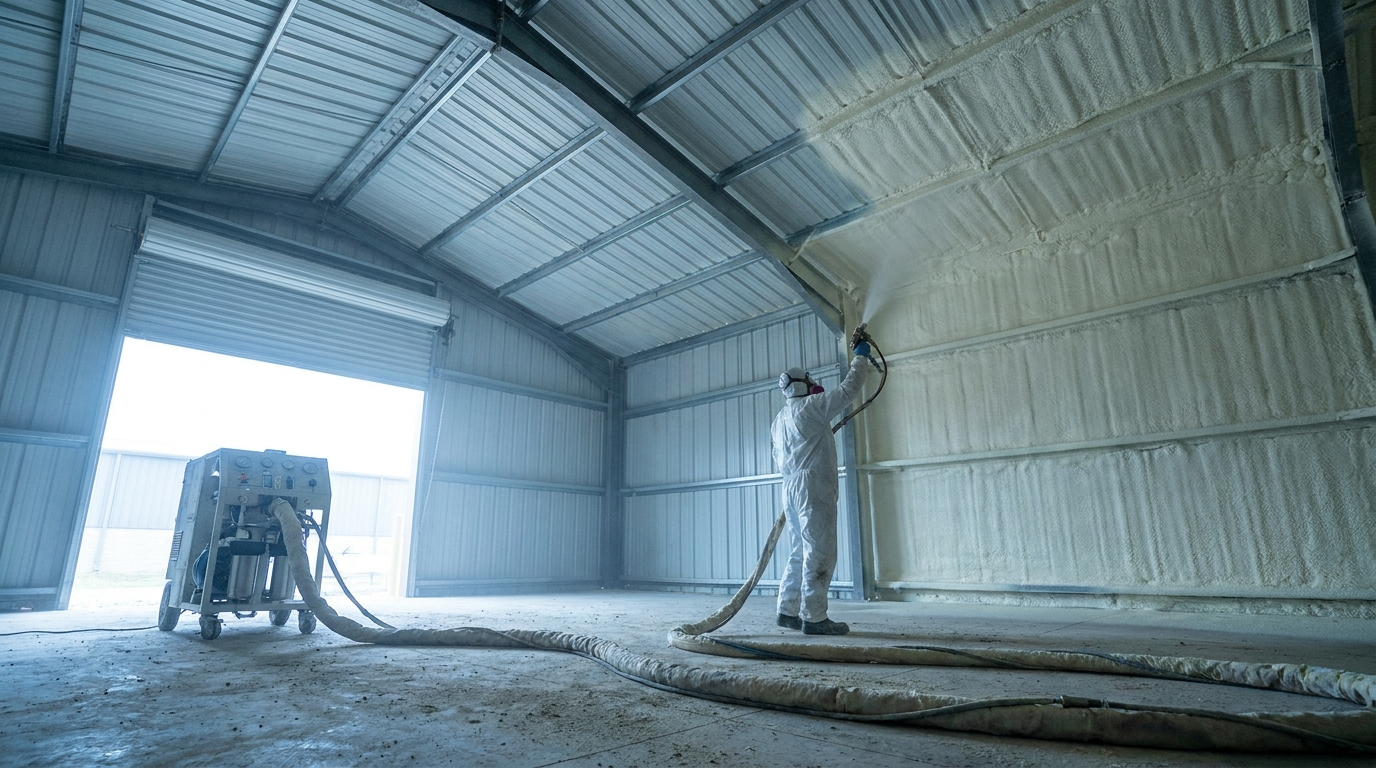
Commercial properties — warehouses, agricultural buildings, workshops, and retail units across Leeds and the wider West Yorkshire area — often have large roof spans where traditional insulation is slow to fit and prone to gaps at joints and fixings. Spray foam covers these spans quickly, sealing around steel purlins, roof lights, and irregular structural details in a way that batts and boards can’t match.
For commercial clients, the benefit is usually as much about heat retention and reduced energy costs as it is about stopping condensation dripping from an uninsulated metal roof onto stock or machinery below. We survey the building fabric, existing ventilation, and roof covering before recommending open cell or closed cell foam, and we work around business operating hours where needed to minimise disruption. Guarantee terms and compliance documentation are provided the same as for domestic work, which matters for commercial insurance and future sale of the building.
What You’ll Gain
Reduced heat loss through the roof, which for most Leeds homes translates into a noticeably warmer loft space and lower heating bills over a winter. Fewer draughts, since foam seals gaps that mineral wool simply sits on top of. A quieter roof space, particularly with open cell foam. And, done properly with correct ventilation, a Building Regulations-compliant installation with documentation that supports rather than complicates a future house sale or EPC assessment.
What It Costs and How Long It Takes
For a typical semi-detached loft, expect a domestic spray foam installation to run from roughly £1,000 to £3,000, depending on roof area, foam type, and thickness specified. Larger properties, warm roof conversions, or commercial buildings will cost more — we give exact figures after the survey, not before. Most domestic jobs take one to two days on site. The free survey itself takes around 30–45 minutes and includes a written specification and quote, so there’s no pressure to decide anything on the day.
Get a Free, No-Obligation Survey
If you’re weighing up spray foam insulation for a Leeds property — new installation, loft conversion, or a commercial roof — book a free survey and we’ll give you a straight answer on what your roof needs, what it’ll cost, and what the paperwork looks like. We’re open seven days a week, 9am to 7pm, so call or get in touch online whenever suits you.

How It Works
From initial survey to completion — here’s what to expect when you work with us.
-
Free Survey
We take a look at your property and tell you exactly what we find — no guesswork.
-
Straight Quote
A clear, itemised quote within 48 hours. No hidden costs, no pressure to decide on the spot.
-
The Work Itself
Our team carries out the job to BBA-approved standards, with minimal disruption to your home.
-
Final Check
We check the finished work with you, tidy up properly, and explain what we did and why.
Frequently Asked Questions
It can, if it's not installed and documented correctly. Many lenders want evidence that ventilation was accounted for and that the installation meets Building Regulations. We provide full paperwork and a 25-year guarantee with every job specifically so you have that evidence if a surveyor or lender asks for it later.
Open cell is softer, cheaper, and breathable — good for most loft conversions. Closed cell is denser, more waterproof, and better where space is tight or moisture risk is higher, such as flat roofs. Our survey determines which suits your roof construction rather than defaulting to one type.
Yes, though it's more involved than removing traditional insulation, since it bonds to timber. We carry out both installation and removal, so if a future buyer or surveyor wants it taken out, we can strip it back to the rafters and check the timber underneath.
Spray foam insulation itself doesn't usually need planning permission, but it does need to meet Building Regulations thermal and ventilation standards. We provide compliance documentation as part of every installation, which you should keep with your property paperwork.
If your EPC or a previous survey mentions foam insulation, or you can see a solid yellow or white coating on the underside of your roof felt from the loft hatch, it's worth a free inspection. We'll tell you honestly whether it's fine as it is or needs attention — not every foam installation is a problem.
Ready for a Free, No-Obligation Survey?
We'll take a look, tell you exactly what we find, and give you a straight quote — no pressure, no upselling.