Loft Insulation Leeds: Topping Up, Upgrading and Getting It Right
Loft Insulation Leeds — cut energy bills and boost your EPC rating with a proper 270mm install or top-up. Free survey available.
Loft Insulation Leeds: Topping Up, Upgrading and Getting It Right
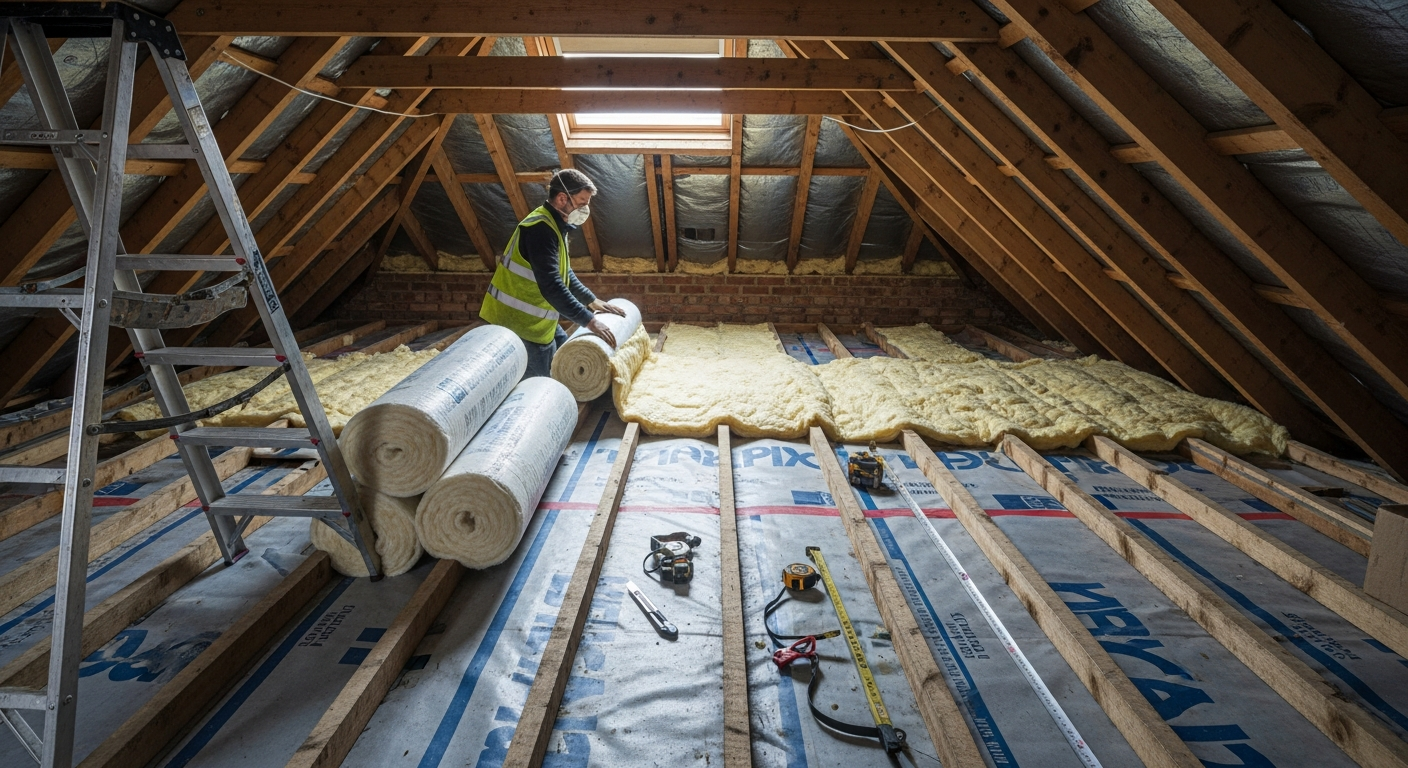
If your loft has thin, patchy or flattened insulation, you’re paying to heat the sky above your house. Most Leeds properties built before the 1990s have somewhere between 50mm and 100mm of old fibreglass or mineral wool up there — well short of the 270mm now recommended by the Energy Saving Trust. Whether you need a straightforward top-up, a full re-insulation job, or specialist work around a loft conversion, this is where we explain exactly what each option involves and what it costs. We survey every job in person before quoting, so what follows is genuinely how we work — not a generic sales pitch.
What’s Actually Involved
Loft insulation isn’t complicated in principle — you’re creating a barrier that stops warm air escaping through the roof — but getting the detail right matters more than most homeowners realise. Insulation laid too thick without ventilation gaps can cause condensation and rot in the timbers. Insulation compressed under stored boxes stops working almost entirely, because it relies on trapped air pockets, not just material thickness. And insulation laid badly around downlights, water tanks and hatch edges leaves gaps that undo most of the benefit.
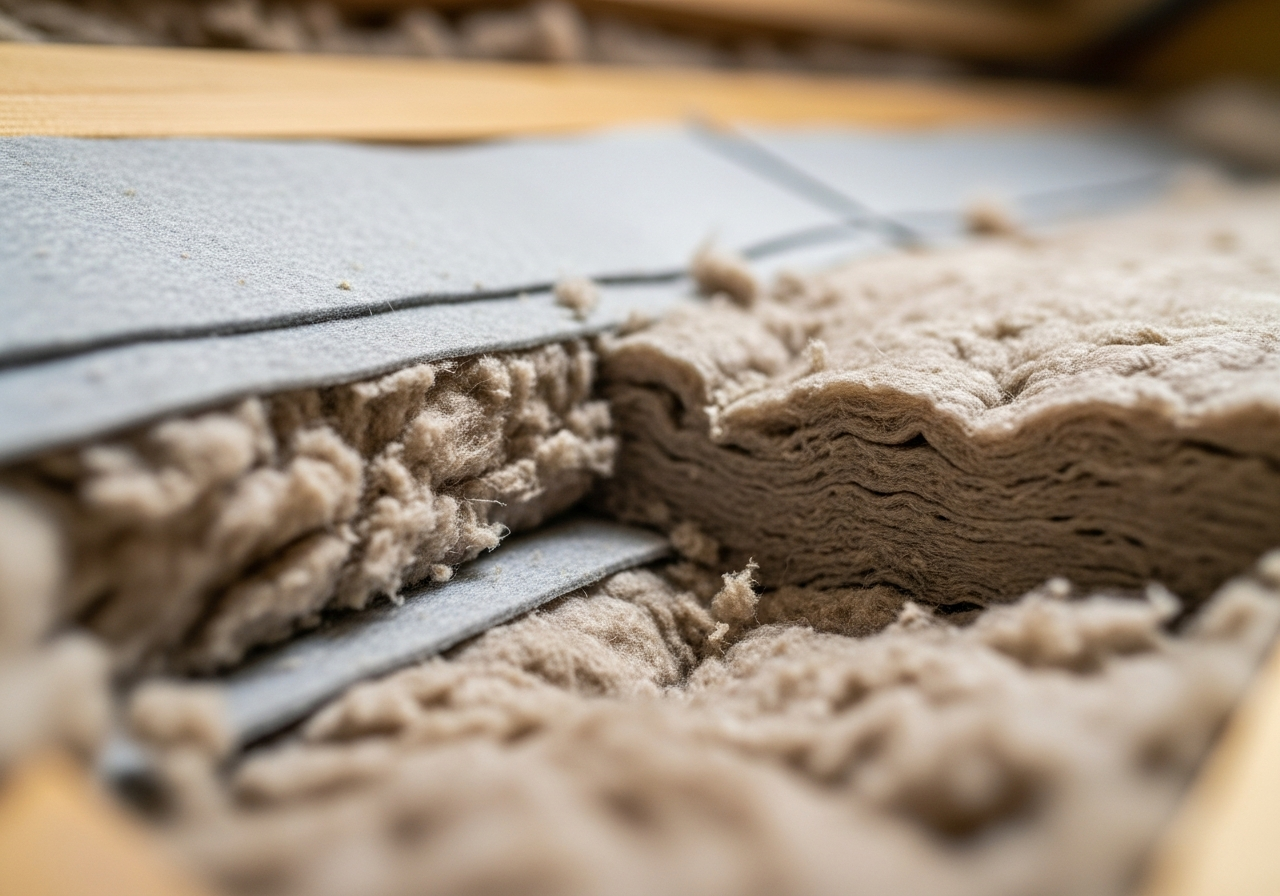
We work mainly with mineral wool (rolled or blown) for standard loft floors, and rigid PIR boards or spray foam where roofline insulation is needed instead — for example, in loft conversions or rooms with sloped ceilings. Current Building Regulations (Approved Document L) call for a minimum U-value that, in practice, means around 270mm of mineral wool or an equivalent thickness of higher-performance material. We work to this standard as a baseline, not a maximum.
Who Needs This Work Doing
Typical callouts fall into a few clear categories. First, older semis and terraces across Leeds — Chapel Allerton, Headingley, Roundhay, Horsforth — where the original insulation was installed decades ago and has settled, degraded or simply isn’t thick enough anymore. Second, homeowners preparing to sell, where an EPC assessor has flagged poor loft insulation as an easy win to lift the rating before marketing. Third, people who’ve had cold spots, high heating bills or ice patches on the roof in winter — a sign heat is escaping straight through the loft. Fourth, anyone part-way through a loft conversion who needs the sloped sections and party walls insulated properly rather than as an afterthought.
Step by Step: How We Handle the Job
- Free survey – We climb into the loft, measure existing depth and condition, check ventilation at the eaves, and look for damp, timber damage or old cold-water tank lagging that needs addressing first.
- Quote and material recommendation – You get a written price on the spot in most cases, with the material and thickness explained in plain terms.
- Clearing and preparation – Loose stored items need moving before we start; we can advise on this during the survey.
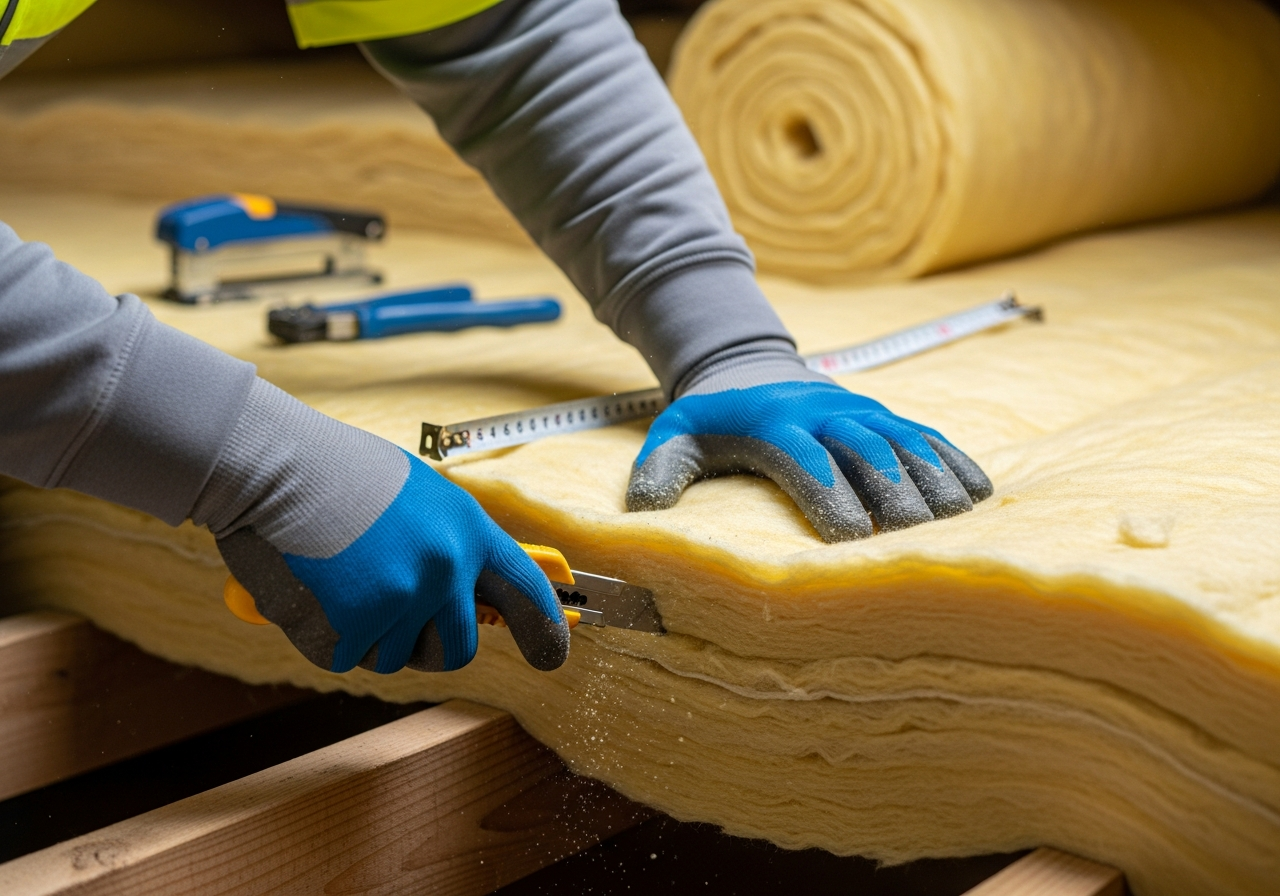
- Installation – Insulation is laid or blown to the agreed depth, working around joists, pipework and light fittings, with eaves ventilation kept clear.
- Tank and pipe protection – Any water tanks and pipes in the loft are insulated separately so they don’t freeze once the loft space itself gets colder (a genuine side effect of good insulation).
- Sign-off – We confirm depth achieved and, where relevant, provide documentation for EPC or Building Regulations purposes.
Loft Insulation Top Up
If you’ve already got some insulation but it’s thin, patchy or has been disturbed by previous work in the loft, a top-up is usually the most cost-effective fix. We measure what’s there, check it’s still doing its job (old insulation that’s damp, mouldy or compressed flat is often better removed than added to), and bring the total depth up to the recommended 270mm using mineral wool. This suits most semi-detached and terraced houses in Leeds built between the 1960s and 1990s, where 50-100mm of ageing fibreglass is still in place but well below current standards. It’s typically a half-day job with no need to touch the roof structure itself. The benefit is straightforward: a noticeably warmer house in winter, lower heating bills, and — if you’re selling — a quick, low-cost improvement to your EPC rating before valuation.
270mm Loft Insulation Installation
Where there’s little or no existing insulation, or what’s there needs stripping out entirely, we install a full 270mm depth from scratch. This is the depth recommended by the Energy Saving Trust and broadly aligned with Building Regulations guidance for existing dwellings. We usually lay it in two layers — one between the joists, one across them at right angles — which reduces cold bridging through the timber itself, a detail that’s often missed on cheaper jobs. This suits new-build extensions, older properties with degraded or rodent-damaged insulation, and homes where the loft has never been properly insulated at all. Done properly, it’s one of the best-value energy improvements available for a UK home, with a payback period typically measured in a few years rather than decades.
Cold Roof Insulation
Cold roof insulation refers to insulating at ceiling joist level (keeping the loft space itself cold) as opposed to insulating the roofline (which brings the loft into the heated envelope of the house). This is the standard approach for lofts used purely for storage rather than converted living space. The key technical point is ventilation — a cold roof relies on airflow at the eaves to stop moisture building up in the roof timbers, so insulation must never block the gap between the wall plate and the roof felt or membrane. We fit eaves ventilation trays where needed to maintain this airflow, particularly important in older Leeds properties with limited existing eaves ventilation. Get this wrong and you risk condensation, black mould and, over years, timber rot — problems that cost far more to fix than the insulation saves. Homeowners benefit from a warmer house below and a loft that stays dry and structurally sound above.
Loft Conversion Insulation
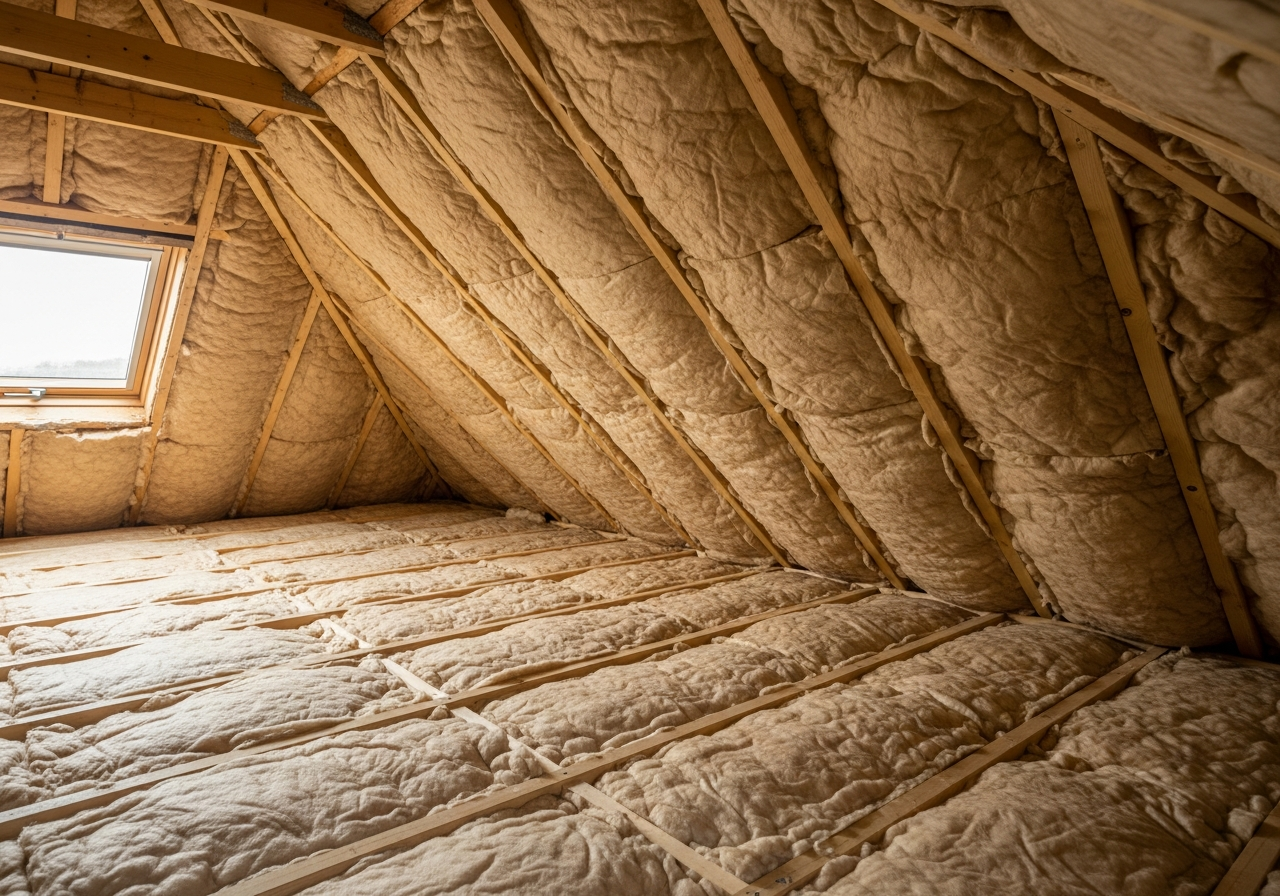
Loft conversions need a different approach entirely, because the insulation goes into the roof slopes, not the floor. Here we’re typically working with rigid PIR boards between and over the rafters, sometimes combined with spray foam in tighter or irregular spaces, to meet the higher U-value standards required for habitable rooms under Building Regulations. This matters for anyone converting a loft into a bedroom, office or living space in Leeds, where planning and building control sign-off depends on the insulation meeting current thermal performance standards — not the older, lower bar that applied to storage lofts. Get it wrong and you risk a failed building control inspection, condensation in the roof structure, or a room that’s uncomfortably cold in winter and stifling in summer. We insulate rafters, party walls, dormer cheeks and flat sections consistently, so the finished room performs as a proper habitable space rather than a converted loft in name only.
What You’ll Gain
Properly installed loft insulation is one of the few home improvements that pays for itself. You’ll notice a warmer house with less draught from upstairs ceilings, lower heating bills (the Energy Saving Trust estimates meaningful annual savings for a typical semi moving from poor to recommended depth), a better EPC rating if you’re selling or remortgaging, and reduced condensation risk when ventilation is handled correctly alongside the insulation itself.
What It Costs and How Long It Takes
- Top-up (existing insulation present): roughly £300–£600 for a typical semi-detached loft, depending on area and access.
- Full 270mm installation from scratch: roughly £500–£1,000 for a typical three-bed house.
- Cold roof insulation with eaves ventilation work: roughly £600–£1,200, depending on how much ventilation remediation is needed.
- Loft conversion insulation (rigid board or spray foam to rafters): roughly £1,500–£4,000+, depending on roof size and complexity.
Most straightforward jobs are completed in a single day. Loft conversion insulation can take two to three days depending on the size of the roof and whether party wall work is involved. Every job starts with a free, no-obligation survey — we measure, assess ventilation and existing condition, and give you a fixed price before any work is booked.
Get a Free Survey
If your loft’s cold, your bills feel too high, or you’re just not sure what’s up there, book a free survey. We’re open seven days a week, 9am to 7pm, and every quote is given after a proper look in person — not a guess over the phone.
How It Works
From initial survey to completion — here’s what to expect when you work with us.
-
Free Survey
We take a look at your property and tell you exactly what we find — no guesswork.
-
Straight Quote
A clear, itemised quote within 48 hours. No hidden costs, no pressure to decide on the spot.
-
The Work Itself
Our team carries out the job to BBA-approved standards, with minimal disruption to your home.
-
Final Check
We check the finished work with you, tidy up properly, and explain what we did and why.
Frequently Asked Questions
Yes, ideally — anything stored directly on the joists needs moving so we can access the full floor area. We can advise during the survey on what needs shifting and can sometimes help with heavier items, but general clearance is usually the homeowner's job beforehand.
Not if it's installed correctly. The risk comes from blocking eaves ventilation, not from the insulation thickness itself. We always check and maintain airflow at the eaves as part of the job, fitting ventilation trays where needed.
Yes. Downlights need fire-rated covers or a gap maintained around them to avoid overheating, and hatches need insulated covers fitted separately. We handle both as standard rather than leaving gaps in these spots, which is a common shortcut on cheaper jobs.
Some households qualify for support through schemes like ECO4, depending on circumstances and property type. We can advise during the survey whether your situation might qualify, though eligibility is set by the scheme provider, not us.
Loft floor insulation (mineral wool) keeps the loft space cold and insulates at ceiling level. Spray foam is usually applied directly to the roofline and brings the loft into the heated space — common in loft conversions but not suitable for every roof. We install and remove both, so we'll tell you honestly which fits your situation.
Ready for a Free, No-Obligation Survey?
We'll take a look, tell you exactly what we find, and give you a straight quote — no pressure, no upselling.