Keeping Leeds Homes Warmer: Wall Insulation Options That Actually Suit Your Property
External Wall Insulation in Leeds — cut heating bills, boost EPC rating and property value. BBA approved, 25-year guarantee. Free survey available.
Keeping Leeds Homes Warmer: Wall Insulation Options That Actually Suit Your Property
Cold walls are the single biggest reason older Leeds homes lose heat. Whether you’ve got a 1930s semi in Chapel Allerton with an unfilled cavity, or a stone-built terrace in Armley with solid nine-inch walls, the fix depends entirely on how your property was built. Get it wrong and you’re wasting money — or worse, trapping moisture inside the wall build-up.
We survey the property first, tell you honestly which type of wall insulation applies, and give you a fixed price before any work starts. Every job is BBA approved and backed by a 25-year guarantee. Surveys are free, with no obligation, and we’re on the phone or on-site seven days a week, 9am to 7pm.
What’s Actually Involved in Insulating a Wall
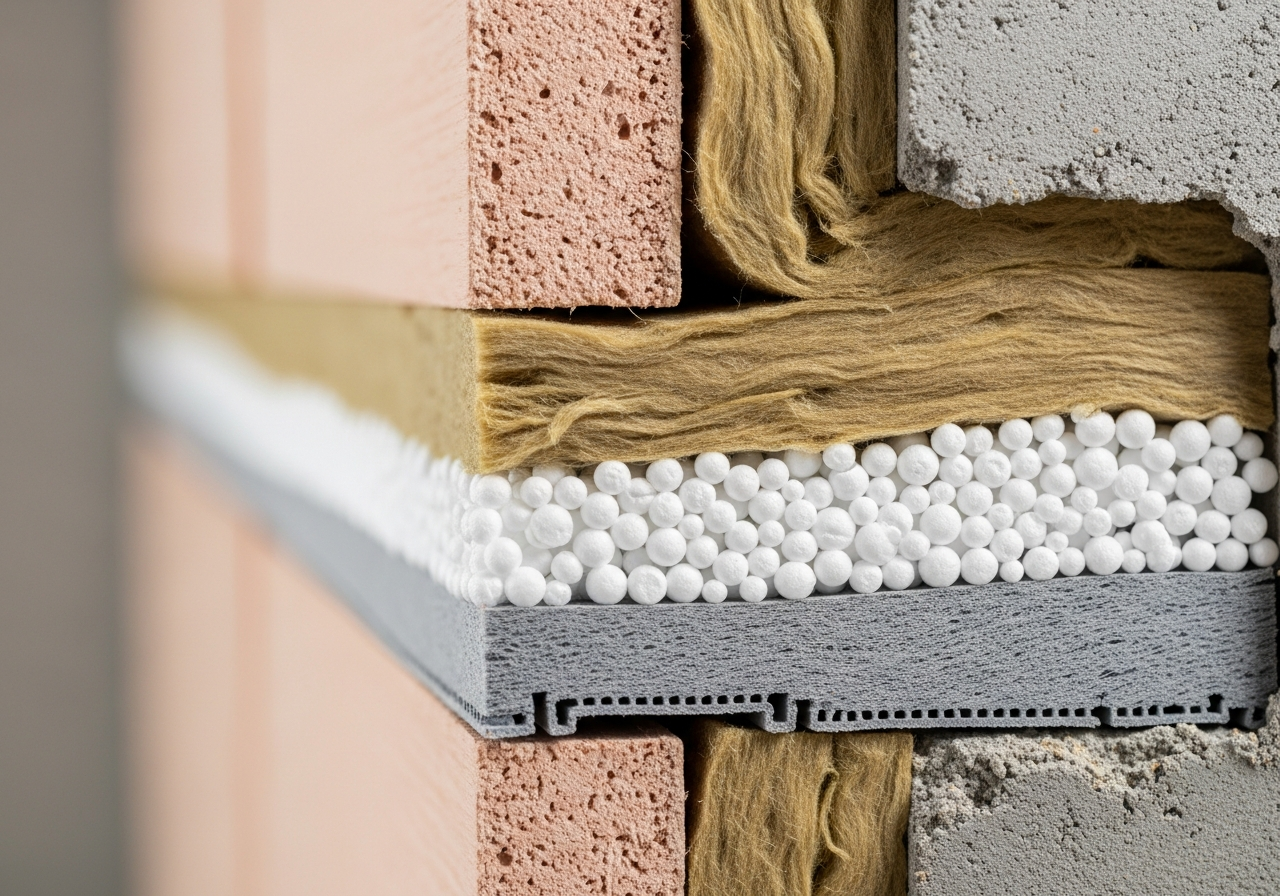
There are two entirely different approaches here, and it matters which one your house needs. Cavity wall insulation fills the gap between two brick skins — most homes built from the 1930s onwards have this gap, usually 50-75mm wide. Solid wall insulation, by contrast, adds a layer of insulation to the outside or inside face of a wall that has no gap at all, common in Victorian and Edwardian terraces, stone cottages, and pre-1930s housing stock generally.
Get the wrong treatment applied and you can end up with damp problems, cold bridging at junctions, or insulation that simply doesn’t perform. That’s why the survey stage isn’t a formality — it’s where we work out wall construction, existing insulation (if any), damp history, and whether there are any defects that need addressing before insulation goes in.
Who This Is For
- Homeowners with unusually high heating bills relative to house size
- Anyone selling or remortgaging where an EPC rating is holding back the valuation
- Owners of solid-wall Victorian or Edwardian terraces across inner Leeds — Burley, Hyde Park, Beeston, Harehills
- Post-war cavity properties in areas like Middleton, Cross Gates or Farnley where the cavity has never been filled
- Landlords needing to meet EPC minimum standards for rented property
- Anyone doing a full renovation where scaffolding is already up and rendering or re-cladding is planned anyway
Cavity Wall Insulation
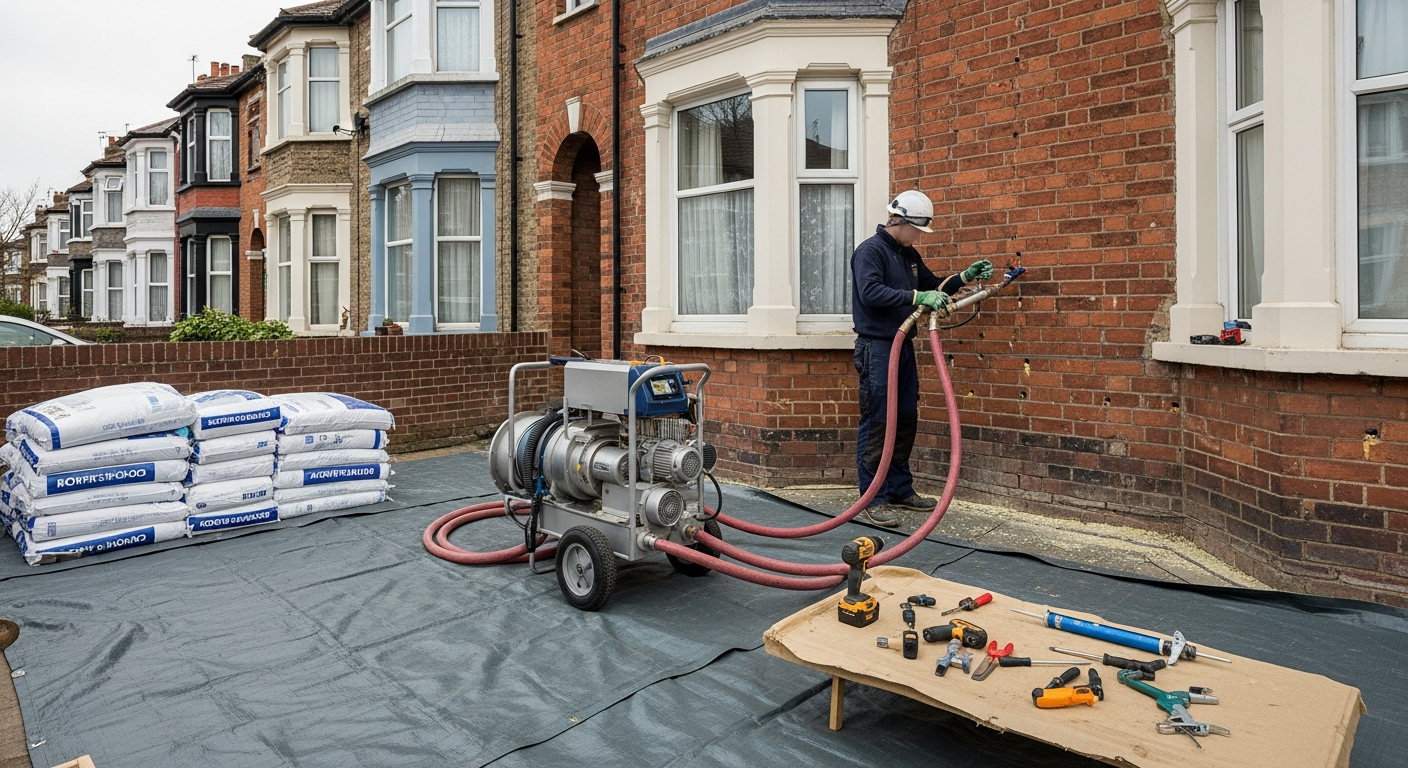
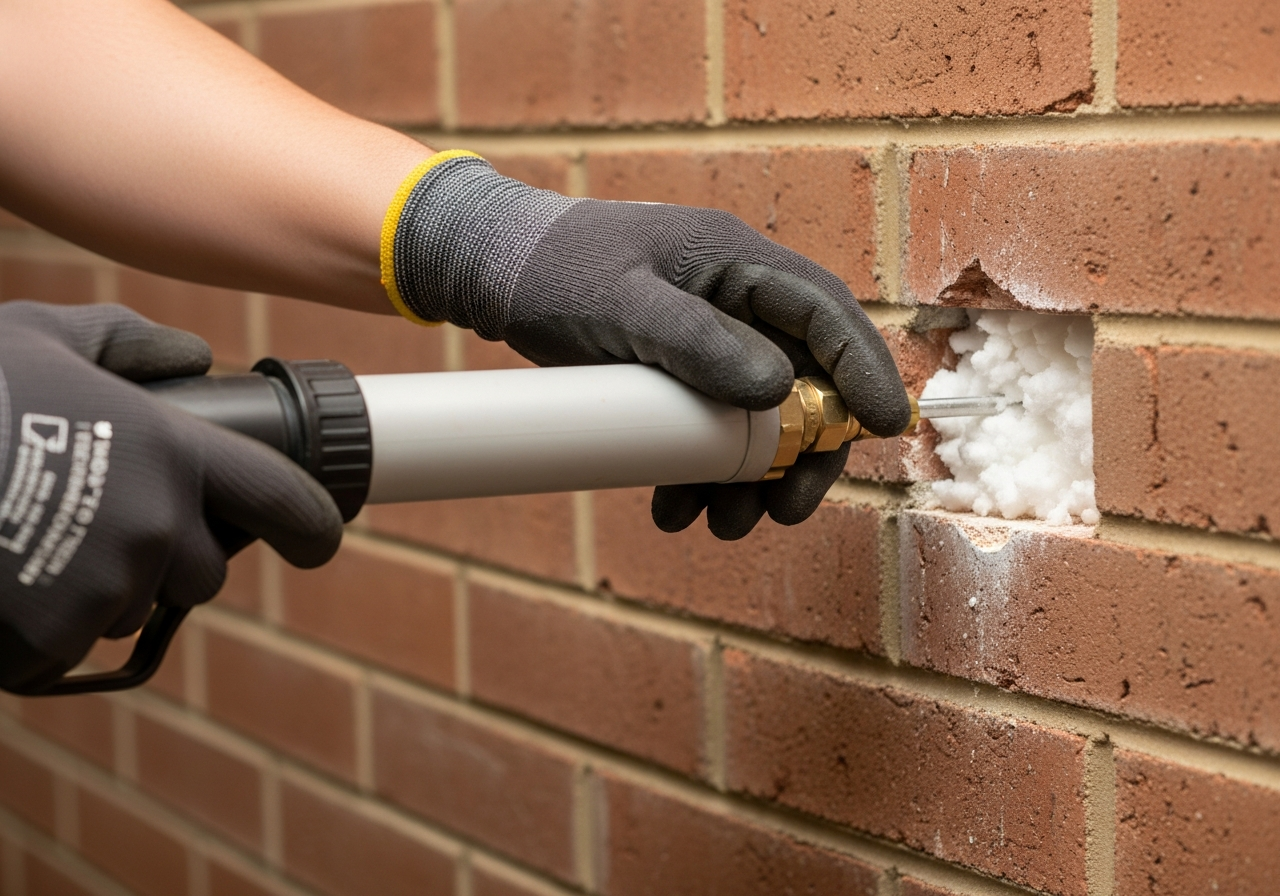
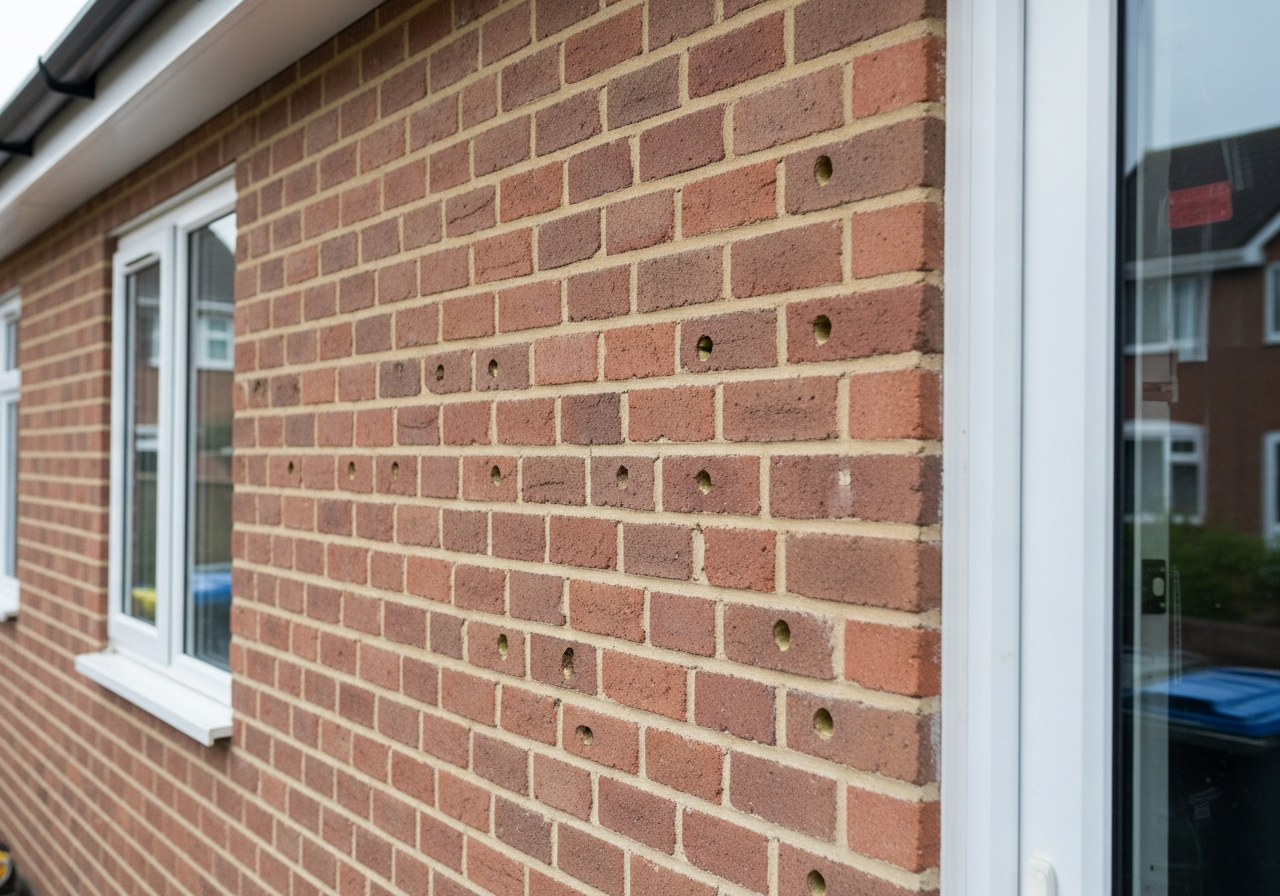
If your Leeds home was built from around 1930 onwards, there’s a good chance it has a cavity — a gap between the outer and inner brick or block skins, originally left there to stop damp crossing through. Cavity wall insulation involves drilling a pattern of small holes into the mortar joints from outside, then injecting insulation material (usually mineral wool bead or blown fibre) into that gap under controlled pressure, before the holes are neatly mortar-filled to match the existing brickwork.
It’s one of the quickest and most cost-effective insulation upgrades available for the right property type — most semi-detached and terraced houses take a single day. Because there’s no external cladding or render involved, there’s no change to the appearance of the house and no scaffolding required in most cases.
This suits homeowners in postwar estates across areas like Seacroft, Rothwell and Morley, where the cavity exists but was never filled at construction. Before we recommend it, we check the cavity is clear, dry and suitable — some properties, particularly those in exposed locations or with existing damp issues, aren’t good candidates, and we’ll say so rather than push ahead regardless.
Solid Wall Insulation
Solid wall properties — typically pre-1930s stone or brick terraces common across Holbeck, Kirkstall and Armley — have no cavity to fill, so the approach is different. Insulation is fixed either to the outside of the wall (external wall insulation, finished with a render or brick-slip system) or to the inside face (internal wall lining, usually rigid insulation boards plus plasterboard).
External application is generally preferred where the property’s appearance allows for it, since it doesn’t reduce room sizes internally and it improves weatherproofing at the same time as insulating. It also addresses cold bridging at floor and window junctions far more effectively than an internal system can.
This route suits owners of period terraces, stone cottages and older detached houses where solid walls are losing heat constantly, regardless of how well the loft or floors are insulated. It’s a bigger job than cavity filling — several days rather than one — but it makes the most noticeable difference to comfort in draughty, older housing stock, and it’s often the single biggest lever available for improving an EPC rating on a solid-wall property.
From Survey to Completion
- Free survey — we inspect wall construction, check for damp or defects, and confirm which insulation type applies to your property.
- Fixed quote — a written price covering materials, labour, scaffolding (if needed) and finish, with no vague estimates.
- Preparation — repairs to pointing, render or brickwork are carried out first, since insulation should never go over an existing defect.
- Installation — cavity filling by injection, or solid wall board fixing and render/finish application, carried out by trained installers.
- Finishing — render, brick-slip or plasterboard finish applied and made good to match the surrounding property.
- Sign-off — you receive your guarantee documentation and, where applicable, registration with the relevant industry body.
What You’ll Gain
- Lower heating bills — solid and cavity walls are typically the largest area of heat loss in an uninsulated house, often more than the roof.
- A warmer, more even house — fewer cold spots near external walls, less condensation on internal wall surfaces.
- Better EPC rating — relevant for remortgaging, selling, or meeting minimum energy efficiency standards on rented property.
- Reduced running costs long-term — insulation doesn’t wear out or need replacing the way a boiler does.
- Protection for the building fabric — external solid wall systems in particular improve weatherproofing as well as thermal performance.
What It Costs and How Long It Takes
Cavity wall insulation for a typical three-bed semi generally runs from around £400 to £1,200, and most properties are completed in a single day.
Solid wall insulation is a bigger undertaking. External wall insulation on an average semi-detached or terraced property typically costs £8,000 to £15,000 depending on wall area, scaffolding requirements and finish type (render versus brick-slip). Internal wall insulation, where external isn’t suitable, tends to run £4,000 to £9,000 but involves disruption inside the home and some loss of room size.
The survey itself takes around 45 minutes to an hour on-site, and there’s no charge and no obligation to proceed. We’ll confirm wall type, take measurements, check for damp or existing defects, and give you a written quote — usually within a couple of days of the visit.
Common Questions
Do I need planning permission for external wall insulation? Most houses can have external wall insulation under permitted development rights, but there are exceptions — listed buildings, conservation areas, and some flats or maisonettes may need consent. We check this as part of the survey and flag it before any work is agreed.
Will cavity wall insulation cause damp? Not if the cavity is suitable and the work is done correctly. Damp problems usually trace back to a cavity that was unsuitable from the start — bridged, damaged, or in a very exposed location — which is exactly what the pre-installation survey is there to catch.
How do I know if my walls are cavity or solid? Houses built from the 1930s onwards usually have cavity walls; pre-1930s properties are typically solid. Brick bond pattern is a reasonable clue — solid walls often show a header (short end) brick pattern — but we confirm it properly on-site rather than guessing from the street.
Will this improve my EPC rating? Wall insulation is usually one of the most significant EPC improvements available, particularly on solid-wall properties. We can’t guarantee a specific rating change since EPCs factor in other elements too, but it’s typically the single biggest lever for older housing stock.
Does the guarantee cover the render or finish as well as the insulation? Yes — our 25-year guarantee covers the insulation system as installed, including the external finish where applicable. Details are set out in your paperwork at completion so you know exactly what’s covered.
Get a Straight Answer on Your Walls
If your Leeds house is cold, expensive to heat, or has just come back from an EPC assessment with wall insulation flagged, get a free survey booked in. We’ll tell you plainly whether your walls are cavity or solid, what work applies, and what it’ll cost — no pressure, no obligation. Call us or book online, seven days a week, 9am to 7pm.
How It Works
From initial survey to completion — here’s what to expect when you work with us.
-
Free Survey
We take a look at your property and tell you exactly what we find — no guesswork.
-
Straight Quote
A clear, itemised quote within 48 hours. No hidden costs, no pressure to decide on the spot.
-
The Work Itself
Our team carries out the job to BBA-approved standards, with minimal disruption to your home.
-
Final Check
We check the finished work with you, tidy up properly, and explain what we did and why.
Ready for a Free, No-Obligation Survey?
We'll take a look, tell you exactly what we find, and give you a straight quote — no pressure, no upselling.